This entry details a law enforcement officer's account of responding to a subject armed with a knife and a blow dart gun. It covers de-escalation attempts during a 45-minute standoff, the strategic use of cover, and the eventual deployment of a Taser for subject incapacitation. The narrative highlights the importance of backup, situational awareness, and understanding subject behavior in high-stress encounters, drawing on the experienced perspective of the speaker.
This video analyzes a Yuma Police Department response to a volatile individual threatening neighbors with knives. Officers demonstrated excellent de-escalation techniques, maintaining distance, and attempting verbal communication. The analysis highlights the importance of discretionary time, tactical positioning, and the appropriate use of non-lethal force options like tasers, while also discussing the justification for lethal force when a deadly threat is imminent. The officers' professionalism and adherence to training in a high-stress situation are commended.
Instructor Mike details his former police duty belt setup, emphasizing strategic placement of essential gear for efficient and safe deployment. He highlights the importance of holster retention, natural magazine indexing, inward-facing handcuffs for rapid application, and support-side taser and baton carry to maintain firearm access. The guide stresses avoiding the small of the back for equipment and using belt keepers for gear security.
This guide synthesizes insights from an Active Self Protection analysis of an Ohio State Patrolman's encounter with a highly agitated suspect. It emphasizes the critical need for officers to possess personal defensive skills beyond standard training, particularly when facing individuals in states of 'delirium with agitation'. The analysis highlights tactical considerations for less-lethal tool deployment, the importance of transitioning to empty-handed skills when tools fail, and the necessity of awareness regarding environmental hazards during violent confrontations.
This video analyzes a critical incident where San Antonio officers engaged a serial armed robber. The analysis, led by John Correia and Mike Willever, highlights the tactical decisions made during a felony stop, including the deployment of a Taser and the subsequent justified use of lethal force when the suspect drew a firearm. The experts emphasize the dangers of 'dual-wielding' less-lethal and lethal options and stress the importance of continuous training for instinctive responses under extreme stress.
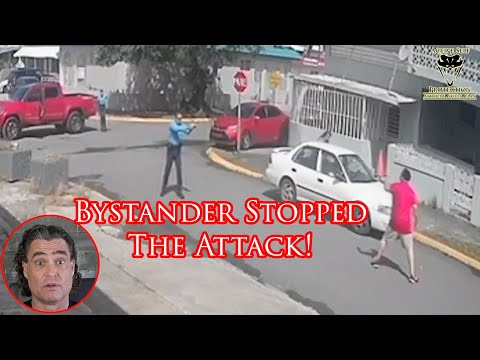
This video from Active Self Protection, hosted by John Correia, analyzes a violent street assault in San Juan, Puerto Rico, where a bystander and off-duty officers intervened. It highlights the effectiveness of a Taser deployment in stopping the attacker and introduces the TAP (Threat, Accomplices, Partner) and IFFS (Injuries, Firearm, Follow-up, Seek help) checklists for post-incident response, emphasizing the importance of preparedness in self-defense scenarios.
This analysis from Active Self Protection, featuring insights from John Correia and Mike Willever, breaks down a critical incident involving Casper, WY officers. It highlights the complexities of domestic dispute calls, the challenges of de-escalation with intoxicated and armed subjects, and the rapid escalation leading to a use-of-force incident. The debrief emphasizes the 'no-win' scenarios officers can face and discusses potential alternative strategies.
This video from Active Self Protection analyzes an incident where an uncooperative suspect, armed with a Glock 22, escalated a confrontation by attempting to draw a firearm. Hosts John Correia and Mike Willever break down the tactical decisions and response times of the officers involved, highlighting the predictable outcome when a suspect resists lawful commands and presents an immediate threat. The analysis emphasizes the importance of officer training and situational awareness in de-escalating or resolving such dangerous encounters.
This video depicts a police pursuit and apprehension scenario where a suspect fleeing from officers is incapacitated by a Taser. The footage shows the deployment of the Taser, the suspect's immediate reaction to neuromuscular incapacitation, and the subsequent arrest by multiple officers. It highlights the use of conducted energy weapons in law enforcement for suspect control.
This short clip depicts law enforcement officers pursuing a suspect involved in multiple car burglaries, including the theft of a firearm. The pursuit escalates to a foot chase, during which an officer deploys a taser and the suspect is apprehended after being shot. The video highlights the inherent dangers faced by officers during felony suspect apprehension.
This video demonstrates a law enforcement officer's effective use of a Taser followed by a waist lock takedown on an assault suspect. The analysis highlights the importance of supplemental training in grappling arts like Judo, BJJ, and wrestling for officers to enhance their control techniques. The footage, captured by bodycam, emphasizes practical application of defensive tactics in real-world scenarios.
This video from Active Self Protection analyzes a critical incident in Brazil where an officer successfully de-escalated a knife-wielding assailant using a Taser. The analysis, led by John Correia and Mike Willever, highlights the importance of tactical positioning, understanding suspect behavior, and the proper deployment of less-lethal tools. It emphasizes that while effective, CEWs require lethal cover due to potential failure and the inherent risks of secondary injuries.
Gun Laws by State
Read firearms regulations for all 50 states + D.C.
Find Gun Dealers
Search licensed FFL dealers near you.