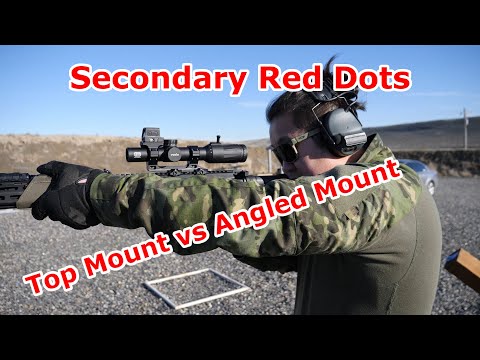
This guide details the considerations for mounting red dot sights on rifles, comparing top-mounted versus 45-degree offset configurations. Instructor Mike Odow emphasizes that while personal preference plays a role, understanding the impact on cheek weld, weapon manipulation, and effective range is crucial. The 45-degree offset offers a consistent cheek weld but has limitations at distance, while top-mounting requires adapting to a new cheek weld position.
This review of the Badger Ordnance Condition One Modular Mount highlights its versatility for LPVOs and secondary red dot optics. The mount offers options for both top-mounted and 45-degree offset red dots, with the offset design featuring in-line barrel alignment for improved downrange accuracy. The reviewer discusses various optic height options and their impact on shooting posture and recoil management, ultimately favoring the offset mount for its cheek weld capabilities despite some drawbacks with night vision use.
This video compares angled versus top-mounted red dot sights as secondary optics on a rifle. It highlights the benefits of red dots for faster target acquisition and use with night vision. The primary difference lies in how the shooter acquires the target with their dominant or non-dominant eye when transitioning from magnification, and the potential for point of impact shifts with top-mounted systems.
You've reached the end! 3 videos loaded.
Gun Laws by State
Read firearms regulations for all 50 states + D.C.
Find Gun Dealers
Search licensed FFL dealers near you.