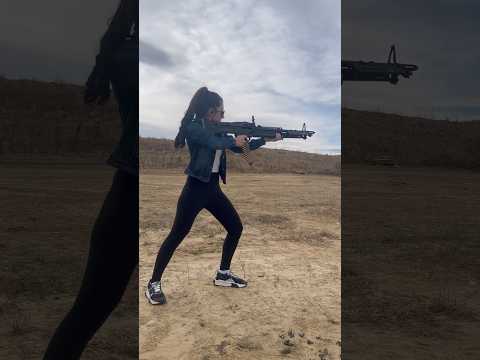
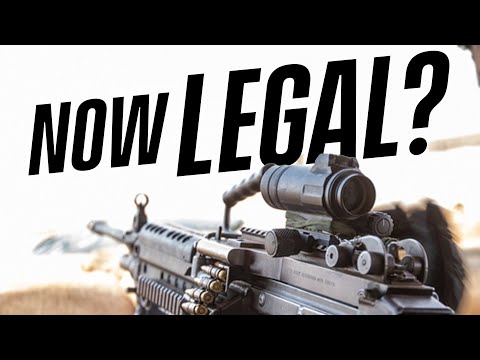
This video discusses proposed state legislation in Kentucky and West Virginia that aims to exploit a loophole in the Hughes Amendment to allow average citizens to purchase newly manufactured machine guns. The legislation proposes state governments act as dealers, potentially bypassing the high costs and restrictions associated with pre-1986 transferable machine guns. The speaker, Brandon Herrera, an FFL holder, analyzes the legal and financial implications, suggesting this could be a significant step towards dismantling the NFA.
Ian McCollum of Forgotten Weapons provides an expert analysis on how Forced Reset Triggers (FRTs) might impact the market value of transferable machine guns. He details the multi-tiered U.S. system for machine gun ownership, including transferable, pre-1986 dealer samples, and post-1986 dealer samples, citing auction data and regulatory history. McCollum concludes that FRTs are unlikely to significantly devalue transferable machine guns due to their uncertain legal status and the established collector demand for legally registered NFA items.
This video, presented by an expert with deep knowledge of NFA regulations and the firearms market, explores the 'military discount loophole' for acquiring surplus M16s. It details how M16 parts kits, transferable pre-1986 machine guns, and police trade-ins offer legal avenues for civilians to own historically significant and potentially appreciating assets. The content emphasizes the legal intricacies, investment potential, and historical value associated with these firearms.
This YouTube video announces a machine gun vendor's presence at Dragonman's on October 25-26, specifying operating hours. While no specific firearms or calibers are detailed, the event itself implies a focus on firearm sales and potentially related activities. The description is minimal, serving primarily as an informational announcement for interested parties.
This video provides an expert-level overview from Brandon Herrera, an FFL/SOT holder and machine gun owner, on the legal acquisition of machine guns in the United States. It details the differences between transferable, dealer sample, no-letter, and keeper machine guns, explaining the regulatory framework including the National Firearms Act and the Hughes Amendment. The guide covers the necessary licensing (FFL/SOT) and associated costs for those looking to enter the firearms industry to acquire post-1986 machine guns.
This video discusses the concept of '2A Gatekeepers' within the Second Amendment community. It explores how individuals or groups can create exclusivity, hindering broader access to firearms rights. The discussion touches on the historical context of the NFA, the financial barriers created by tax stamps, and the motivations behind opposing legislative changes like the Hearing Protection Act (HPA) and the Short Act, often stemming from a desire to maintain the exclusivity and value of existing NFA-item ownership.
Recent court decisions, influenced by the Bruen decision, are challenging federal machine gun bans. Judges are questioning the legality of these bans, particularly concerning firearms in 'common use.' The discussion highlights the distinction between legally owned, registered machine guns and illegally possessed ones, opening a complex legal debate about the Second Amendment's scope.
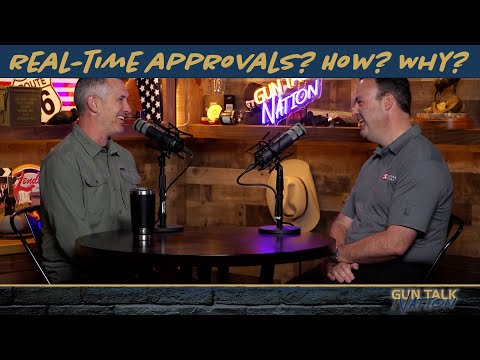
This video discusses the significant reduction in ATF processing times for NFA items, particularly silencers and machine guns. It details how the NFA Branch identified and eliminated duplicative digital processes, leading to real-time approvals for 71% of individual applications. The conversation also touches on the nuances of owning transferable machine guns and emerging trends in silencer technology, such as 3D-printed titanium designs.
This video explores the history and legal landscape surrounding select-fire firearms, commonly known as machine guns. It details how ownership rights have evolved, focusing on key legislation like the National Firearms Act of 1934 and the Hughes Amendment to the Firearm Owners Protection Act of 1986. The speaker argues that restrictions on machine guns are a violation of fundamental rights and contribute to artificial scarcity and inflated prices for pre-1986 transferable models.
This video discusses the significant reduction in wait times for NFA (National Firearms Act) item transfers, primarily suppressors, due to the implementation of the e-Forms system and procedural changes within the ATF. Knox Williams of the American Suppressor Association explains the historical inefficiencies, the impact of new leadership and technology, and the current processing times, which have dramatically decreased from months to days or weeks for many applicants. The discussion also touches on ongoing litigation to legalize suppressors in all 50 states and the importance of industry advocacy.
This video provides an expert update from Forgotten Weapons on significant ATF changes regarding NFA items. Approximately 4,000 pre-May dealer sample machine guns, many of which are HK models, have been reclassified as fully transferable. Additionally, NFA transfer processing times have drastically improved, with eForm submissions now taking as little as one week, a substantial reduction from previous durations.
Gun Laws by State
Read firearms regulations for all 50 states + D.C.
Find Gun Dealers
Search licensed FFL dealers near you.