This video ranks revolvers used during World War I, evaluating them based on action type, ergonomics, reliability, and cartridge effectiveness. It highlights the decline of single-action revolvers and the rise of more modern designs like the Colt and Smith & Wesson 1917 models, which utilized .45 ACP with moon clips for rapid reloading. The presenters, experienced firearms enthusiasts, provide detailed critiques of each model, from the poorly made Romanian 1915 to the highly regarded top-tier revolvers.
This guide details the operation of the Japanese Type 26 Revolver, a historical firearm. It covers the break-top loading procedure, the double-action-only trigger mechanism, and the automatic ejection of spent casings via the star extractor. The demonstration emphasizes proper range safety and handling of this unique piece of firearms history.
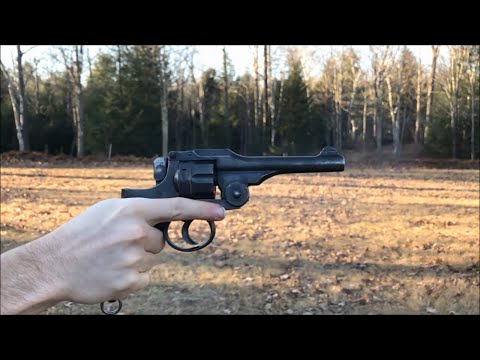
This video features a shooting demonstration of a Japanese Type 26 Revolver. The content focuses on the firearm itself, likely showcasing its operation and handling. The provided hashtags indicate a focus on collectible firearms and revolvers from around the world.
This video provides a silent, demonstration-focused overview of three significant Japanese handguns from WW2: the Type 26 Revolver, Type 14 Nambu, and Type 94 Nambu. Expert handling of these vintage firearms is evident, with clear visual demonstrations of their mechanical operations, loading procedures, and live-fire capabilities. The presentation highlights key features and historical context for each model.
This guide details the field stripping process for the Japanese Type 26 revolver, focusing on accessing its internal mechanisms via the unique hinged side plate. The video from C&Rsenal, presented by an authority on WWI small arms, demonstrates how to open this plate for cleaning and maintenance, a process influenced by designs like the Galand de Guerre. Proper safety protocols are emphasized throughout.
This expert-level review by Ian McCollum of Forgotten Weapons details the Japanese Army 35mm Type 10 Flare Pistol. It covers its development in 1921 (Taishō 10th year), production of approximately 8,300 units, and its mechanical operation, highlighting design similarities to the Type 26 Revolver. The review also features a rare late-war rubberized canvas holster and discusses arsenal markings from the Tokyo Army Arsenal and Kokura.
This book review highlights 'Japanese Military Cartridge Handguns 1893-1945' by Harry Derby II and James Brown. The book is praised as the definitive resource on Japanese handguns, covering everything from the Type 26 revolver to the end of WWII. It details iconic models like the Type 14 and Type 94 Nambu, as well as experimental, low-production, and foreign-procured firearms used by Japanese forces. The review emphasizes the book's detailed photography, historical information, and tabulated data, making it invaluable for collectors and enthusiasts.
You've reached the end! 7 videos loaded.
Gun Laws by State
Read firearms regulations for all 50 states + D.C.
Find Gun Dealers
Search licensed FFL dealers near you.