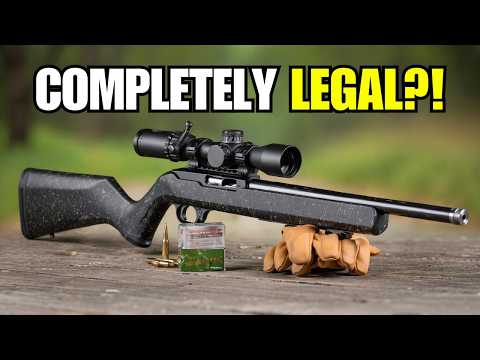
A HUGE DEAL! ATF CAUGHT IN U.S. SUPREME COURT....BY FOUR BOXES DINER

Published on July 30, 2023
Duration: 15:23

This video analyzes the legal arguments presented to the U.S. Supreme Court in Vanderstuck v. Garland, concerning ATF regulations on 'ghost guns.' The speaker highlights potential omissions in the Department of Justice's brief, specifically the absence of the word 'only' from 18 USC 926a and the non-mention of the Firearms Owner's Protection Act of 1986. These omissions are presented as potentially weakening the ATF's claimed statutory authority to regulate privately made firearms without direct Congressional action.

Quick Summary

The U.S. Supreme Court is hearing Vanderstuck v. Garland, challenging ATF 'ghost gun' regulations. A key argument is that the DOJ's brief omitted the word 'only' from 18 USC 926a, a statute intended to limit ATF authority. This omission, along with the non-mention of the 1986 Firearms Owner's Protection Act, suggests the ATF may lack the statutory power to regulate privately made firearms without Congressional action.

Chapters

  1. 00:00Introduction: ATF Ghost Gun Rules in Supreme Court
  2. 00:49Author's Background and Book Mention
  3. 01:07Deep Dive into the Ghost Gun Case
  4. 02:23Branches of Government and ATF's Role
  5. 03:38Agency Authority and Statutory Consistency
  6. 04:48Examining the Enabling Statute: 18 USC 926a
  7. 05:43Key Words: 'Only' and 'Necessary'
  8. 06:18DOJ Brief vs. Actual Statute Text
  9. 07:00Significance of Statutory Authority
  10. 08:18Defining 'Ghost Guns' and ATF Tactics
  11. 09:40Context: Firearms Owner's Protection Act (FOPA) 1986
  12. 11:16FOPA's Purpose: Limiting ATF Authority
  13. 13:07Power vs. Authority in Government
  14. 13:10FOPA's Impact on ATF Authority
  15. 14:22Case Update: Vanderstuck v. Garland
  16. 14:51Concluding Observations and Future Updates

Frequently Asked Questions

What is the main legal challenge against the ATF's 'ghost gun' rules?

The primary challenge is whether the ATF has the statutory authority under laws like 18 USC 926a to expand the definition of firearms to include privately made firearms ('ghost guns') without explicit authorization from Congress. Critics argue the ATF is overstepping its bounds by enacting regulations that effectively create new laws.

What specific omission in the DOJ's Supreme Court brief is highlighted?

The speaker points out that the Department of Justice's brief to the Supreme Court omitted the word 'only' when quoting 18 USC 926a. The actual statute states the Attorney General may prescribe 'only' such rules and regulations as are necessary, a crucial limiting term that was absent in the DOJ's summary.

How did the Firearms Owner's Protection Act of 1986 impact ATF authority?

The Firearms Owner's Protection Act (FOPA) of 1986 was designed to limit the legal authority of the ATF. It was passed because, prior to 1986, the ATF was perceived as acting too broadly without sufficient Congressional oversight, and FOPA aimed to curb that expansive power.

What is the significance of the term 'ghost gun' in this legal context?

'Ghost gun' is described as a political propaganda term for privately made firearms, often unserialized. The ATF's regulation aims to bring these firearms under federal control, but opponents argue this expansion of scope exceeds the agency's congressionally granted authority.

Related News

All News →

More 2nd Amendment & Law Videos You Might Like

More from The Four Boxes Diner

View all →