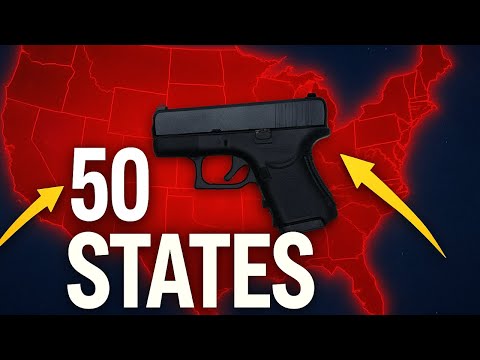
BREAKING: 10 Gun Rules Changing in All 50 States — This Affects You IMMEDIATELY!

Published on December 17, 2025
Duration: 12:50

This video provides an expert-level breakdown of H.R. 38, the Concealed Carry Reciprocity Act, detailing 10 key changes affecting gun owners nationwide. The analysis, drawing on legal precedent like NYSRPA v. Bruen, explains how the bill aims to standardize concealed carry recognition across states, shifting burdens of proof and establishing liability for wrongful arrests. It clarifies that federal gun-free zones and private property rights remain unaffected.

Quick Summary

H.R. 38, the Concealed Carry Reciprocity Act, aims to standardize concealed carry recognition nationwide, allowing valid permits to be recognized across state lines. It mandates law enforcement recognition of out-of-state permits, shifts the burden of proof in challenges to the state, and establishes liability for wrongful arrests, while respecting private property rights and federal gun-free zones.

Chapters

  1. 00:00Introduction to H.R. 38
  2. 01:06Rule 10: National Reciprocity
  3. 02:07Rule 9: Constitutional Carry Across State Lines
  4. 03:09Rule 8: Law Enforcement Recognition
  5. 04:03Rule 7: Burden of Proof Shift
  6. 05:06Rule 6: Liability for Wrongful Arrests
  7. 06:18Rule 5: Elimination of the 'Felony Trap'
  8. 07:24Rule 4: Private Property Rights
  9. 08:24Rule 3: Federal Gun-Free Zones
  10. 09:29Rule 2: State Standards vs. Recognition
  11. 10:36Rule 1: Legal and Historical Precedent

Frequently Asked Questions

What is H.R. 38, the Concealed Carry Reciprocity Act?

H.R. 38 is federal legislation aiming to establish national concealed carry reciprocity. It would ensure that a valid concealed carry permit issued in one state is recognized in all other states that permit concealed carry, simplifying travel for permit holders.

How does H.R. 38 affect law enforcement?

Under H.R. 38, law enforcement officers nationwide must recognize valid out-of-state concealed carry permits. This aims to prevent arrests based on unfamiliarity with different permit formats and shifts the burden of proof in challenges to a permit's validity onto the state.

Does H.R. 38 override private property rights or federal gun-free zones?

No, H.R. 38 explicitly does not override private property rights. Businesses and property owners can still prohibit firearms on their premises. It also leaves federal gun-free zones, like post offices and federal courthouses, unaffected.

What is the 'felony trap' that H.R. 38 aims to eliminate?

The 'felony trap' refers to situations where a law-abiding citizen could unintentionally become a felon simply by crossing a state line due to differing firearm laws. H.R. 38 seeks to prevent this by ensuring legal carry status travels with the individual across state lines.

Related News

All News →

More 2nd Amendment & Law Videos You Might Like

More from Guns You Can't Live Without

View all →