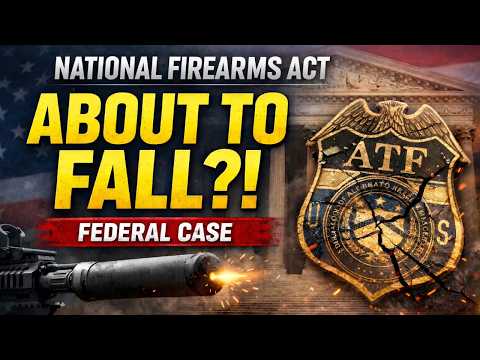
BREAKING NEWS!!! ATF Short Barreled Rifle & Pistol Brace Rule Is In Trouble!

Published on February 3, 2023
Duration: 9:29

This expert analysis from Armed Scholar details the ATF's final rule on pistol braces and the immediate legal challenges filed against it. The video explains how the ATF has expanded the definition of a 'rifle' to reclassify most braced pistols as Short-Barreled Rifles (SBRs), subject to NFA regulations. It highlights key legal arguments, including violations of the delegation doctrine and reliance on precedent like Cargill v. ATF, as plaintiffs seek to halt the rule.

Quick Summary

The ATF's final rule on pistol braces, published January 31, 2023, reclassifies most braced firearms as Short-Barreled Rifles (SBRs) under NFA regulations. Legal challenges from groups like FPC and SAF cite violations of the delegation doctrine and question Chevron deference, referencing precedent from Cargill v. ATF.

Chapters

  1. 00:00ATF Pistol Brace Rule Published
  2. 00:37Compliance Period and Options
  3. 01:12Legal Challenges Filed
  4. 01:54New Regulatory Definitions
  5. 02:47ATF's SBR Determination Factors
  6. 04:36FPC Lawsuit Objectives
  7. 05:48Administrative Law Arguments
  8. 06:27Precedent from Cargill v. ATF
  9. 07:08Delegation Doctrine Violations

Frequently Asked Questions

What is the ATF's new rule regarding pistol braces?

The ATF's final rule, published January 31, 2023, reclassifies most firearms equipped with pistol braces as Short-Barreled Rifles (SBRs), subjecting them to National Firearms Act (NFA) regulations. This rule has a 120-day compliance period ending May 31, 2023.

What legal challenges have been filed against the ATF's pistol brace rule?

Multiple lawsuits have been filed by organizations like the Firearms Policy Coalition (FPC) and Second Amendment Foundation (SAF) seeking to halt the rule. Key arguments include challenging Chevron deference and alleging violations of the constitutional delegation doctrine.

How does the ATF determine if a firearm is a Short-Barreled Rifle (SBR)?

The ATF uses a two-step test: first, it assesses if an accessory provides surface area for shouldering. Second, it evaluates factors such as weight, length of pull, and the presence of optics to classify the firearm.

What is the significance of the Cargill v. ATF ruling in relation to the pistol brace rule?

The 5th Circuit's decision in Cargill v. ATF, which addressed bump stocks, is cited as a crucial precedent. It supports arguments that administrative agencies like the ATF cannot unilaterally redefine statutory terms or create new laws through regulatory interpretation.

Related News

All News →

More 2nd Amendment & Law Videos You Might Like

More from Armed Scholar

View all →