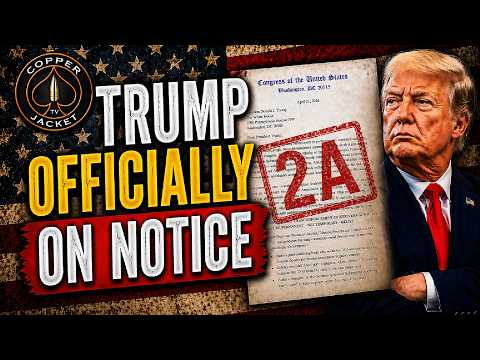
DOJ's Second Amendment Betrayal

Published on November 22, 2025
Duration: 14:53

William Kirk, President of Washington Gun Law, critically analyzes the DOJ's stance on the NFA, arguing it contradicts congressional intent and Second Amendment principles. The DOJ's legal arguments, relying on the taxing power and Commerce Clause, are dissected, highlighting concerns about broad federal regulatory authority over firearms. This analysis is presented with expert-level legal and firearms knowledge.

Quick Summary

The DOJ defends the National Firearms Act (NFA) by arguing it serves revenue-raising purposes via special occupational taxes and is justified under Congress's Commerce Clause power to regulate interstate firearms commerce. They emphasize the difficulty of facial challenges and cite cases like *Miller* and *Heller* to counter Second Amendment claims on certain NFA items.

Chapters

  1. 00:00Introduction to DOJ's Second Amendment Betrayal
  2. 00:56Background: Congressional Letter to DOJ
  3. 01:25DOJ's Response to Summary Judgment Motion
  4. 01:58Anticipated Public Reaction to DOJ Stance
  5. 02:30DOJ's Argument: Facial Challenge & Burden
  6. 03:12DOJ's Argument: NFA Taxation Continues
  7. 04:21DOJ's Analogy: Drug Laws and Federal Oversight
  8. 05:13DOJ's Broad Interpretation of Regulatory Power
  9. 07:22DOJ's Reliance on the Commerce Clause
  10. 08:50Rahimi and Constitutional Challenge Standards
  11. 09:40NFA Justification: Susceptibility to Criminal Misuse
  12. 10:18DOJ Cites Miller/Heller on NFA Item Regulation
  13. 11:42DOJ's Justification for AOWs and Suppressors
  14. 13:00DOJ's Stance: Missed Opportunity for Gun Rights

Frequently Asked Questions

What is the DOJ's main argument for upholding the National Firearms Act (NFA) regulations?

The DOJ argues that the NFA continues to serve revenue-raising purposes through mechanisms like the special occupational tax on businesses, and that Congress has the authority under the Commerce Clause to regulate firearms that affect interstate commerce.

How does the DOJ address the concept of 'facial challenges' in legal cases against the NFA?

The DOJ emphasizes that facial challenges are difficult to win, citing the Supreme Court's guidance in *Rahimi* to focus on circumstances where a statute is most likely constitutional, rather than hypothetical scenarios of unconstitutionality.

Which Supreme Court cases does the DOJ cite to counter Second Amendment claims regarding specific NFA items?

The DOJ cites *United States v. Miller* and *District of Columbia v. Heller* to argue that the Second Amendment does not protect the right to possess short-barreled shotguns and rifles, thereby foreclosing such claims.

What is the criticism leveled against the DOJ's legal strategy regarding the NFA?

Critics, like William Kirk of Washington Gun Law, argue the DOJ's stance contradicts congressional intent, potentially overextends federal regulatory power through broad interpretations of the Commerce Clause, and represents a 'betrayal' of Second Amendment principles.

More 2nd Amendment & Law Videos You Might Like

More from Washington Gun Law

View all →