DOJ's Second Amendment Betrayal

Published on November 22, 2025
Duration: 14:53

William Kirk of Washington Gun Law critically analyzes the Department of Justice's (DOJ) legal arguments against Second Amendment principles concerning the National Firearms Act (NFA). The DOJ's stance, as presented in the *Silencer Shop Foundation, et. al v. ATF* case, challenges congressional intent for $0 taxation on NFA items to mean no registration. Kirk highlights the DOJ's reliance on the Commerce Clause and historical legal precedents like *Miller* and *Heller* to defend NFA regulations, arguing these items are 'quintessentially economic' and 'particularly susceptible to criminal misuse'. This interpretation is seen as a significant setback for gun rights advocates.

Quick Summary

The DOJ defends the National Firearms Act (NFA) by arguing its regulations are a valid exercise of Congress's taxing and Commerce Clause powers. They assert that continued occupational taxes on dealers generate revenue and that NFA items are 'particularly susceptible to criminal misuse,' justifying federal oversight and registration requirements.

Chapters

  1. 00:00Introduction: DOJ's Second Amendment Betrayal
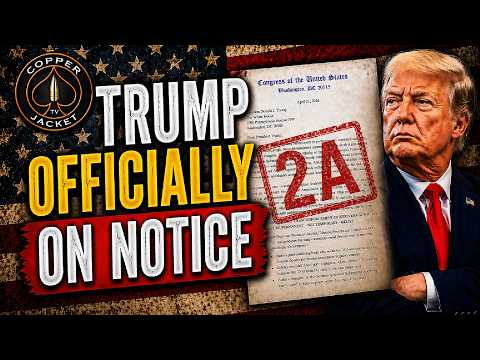
  2. 00:56Background: Congressional Letter to DOJ
  3. 01:25DOJ's Response to Summary Judgment Motion
  4. 01:58Anticipated Public Reaction to DOJ Stance
  5. 02:30DOJ's Argument: Facial Challenge & Burden
  6. 03:12DOJ's Argument: NFA Taxation Continues
  7. 04:21DOJ's Analogy: Drug Laws and Federal Oversight
  8. 05:13DOJ's Broad Interpretation of Regulatory Power
  9. 07:22DOJ's Reliance on the Commerce Clause
  10. 08:50Rahimi and Constitutional Challenge Standards
  11. 09:40NFA Justification: Susceptibility to Criminal Misuse
  12. 10:18DOJ Cites Miller/Heller on NFA Item Regulation
  13. 11:42DOJ's Justification for AOWs and Suppressors
  14. 13:00DOJ's Stance: Missed Opportunity for Gun Rights

Frequently Asked Questions

What is the DOJ's main argument against the Second Amendment challenge to the NFA?

The DOJ argues that the NFA's regulations are a valid exercise of Congress's taxing and Commerce Clause powers. They contend that even with $0 individual taxation, the continued occupational tax on dealers generates revenue, and the NFA regulates items 'particularly susceptible to criminal misuse,' justifying federal oversight.

How does the DOJ use historical legal cases to defend the NFA?

The DOJ cites *United States v. Miller* and *District of Columbia v. Heller* to argue that certain NFA items like short-barreled rifles/shotguns are not protected by the Second Amendment. They also reference *Rahimi* for standards in facial challenges and *United States v. Peterson* for suppressors, deeming NFA regulations 'presumptively lawful'.

What is the significance of the DOJ's stance on $0 taxation for NFA items?

The DOJ's position challenges the interpretation that $0 individual taxation on NFA items (like suppressors or SBRs) was intended by Congress to mean no registration. Instead, they argue the NFA's regulatory framework, including occupational taxes, remains valid and necessary for oversight.

What is the DOJ's justification for regulating items like suppressors and AOWs under the NFA?

The DOJ justifies regulating AOWs by equating them to short-barreled shotguns due to their susceptibility to criminal misuse. For suppressors, they cite precedent that NFA regulations are 'presumptively lawful,' similar to 'shall issue' licensing schemes, and argue these items are 'quintessentially economic' and prone to misuse.

Related News

All News →

More 2nd Amendment & Law Videos You Might Like

More from Washington Gun Law

View all →