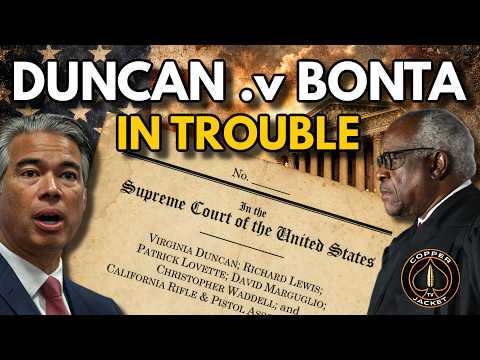
DUNCAN v BONTA: California's Emergency Motion to 9th Circuit in Benitez MAG Case Looks Like a LOSER

Published on September 27, 2023
Duration: 31:13

This video provides an expert analysis of California's emergency motion to the Ninth Circuit in the Duncan v. Bonta case, concerning the state's large-capacity magazine ban. The speaker, Mark Smith, a constitutional attorney, argues that California's legal arguments are weak and misinterpret key Supreme Court precedents like Heller and Bruin. He emphasizes that the 'common use' test for arms bans is historically based, not textual, and the burden is on the government to prove an arm is not in common use. The analysis highlights California's attempt to conflate textual and historical inquiries and misapply language from Bruin.

Quick Summary

California's emergency motion to stay the large-capacity magazine ban is analyzed, with the speaker arguing the state's case is weak. Key legal precedents like Heller v. District of Columbia establish that arms in common use for lawful purposes cannot be banned. The 'common use' test is historically based, and the burden is on the government to prove magazines are not in common use, a burden California cannot meet.

Frequently Asked Questions

What is the core legal argument against California's large-capacity magazine ban?

The core argument is that large-capacity magazines are arms protected by the Second Amendment and are in common use for lawful purposes. California's ban, therefore, violates the 'common use' test established in Heller v. District of Columbia, placing the burden on the government to prove these magazines are not in common use, which they cannot.

How does the 'common use' test apply to magazine bans according to the video?

The 'common use' test, derived from historical analysis, means that if a type of arm, like a magazine holding over 10 rounds, is widely owned and possessed by Americans for lawful purposes, it cannot be banned. The video argues that the sheer number of such magazines makes them undeniably in common use.

What is the significance of the Heller v. District of Columbia decision in this case?

Heller is crucial because it established that the Second Amendment protects arms in common use for lawful purposes and that bans on such arms are unconstitutional. It also clarified that the 'dangerous and unusual' standard is the historical basis for banning arms, and arms in common use cannot be unusual.

Why does the speaker believe California's legal arguments are weak?

The speaker believes California's arguments are weak because they misinterpret Supreme Court precedent, conflate textual and historical analyses, and attempt to apply language from Bruin inappropriately to arms ban cases. They also fail to meet the burden of proof required to show magazines are not in common use.

Related News

All News →

More 2nd Amendment & Law Videos You Might Like

More from The Four Boxes Diner

View all →