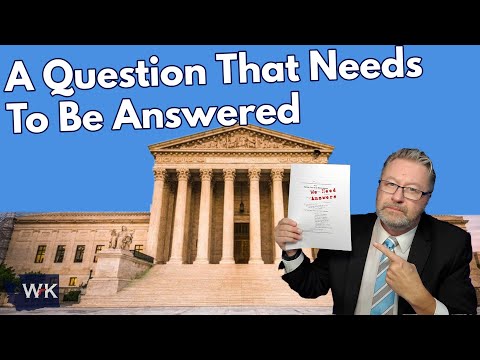
How They've Slowly Disarmed America and the Case to Stop It

Published on November 9, 2025
Duration: 11:01

This video discusses the legal precedent surrounding 18 U.S.C. § 922(g)(1), the federal law prohibiting felons from possessing firearms. It highlights how the Ninth Circuit and other courts have interpreted this law to prevent 'as-applied' challenges, meaning individuals cannot argue that the law should not apply to them based on the nature of their felony conviction. The discussion centers on the case *Duarte v. United States*, which is before the Supreme Court, and argues that the broad expansion of felony definitions has led to the disarmament of millions, often for non-violent offenses.

Quick Summary

The *Duarte v. United States* Supreme Court case addresses 18 U.S.C. § 922(g)(1), the federal law prohibiting felons from possessing firearms. The core issue is whether individuals can make 'as-applied' challenges, arguing the law is unconstitutional for their specific non-violent felony conviction, a right currently restricted by some circuit courts.

Chapters

  1. 00:00Introduction: The Hypothetical of Disarmament
  2. 01:52The Duarte v. United States Case
  3. 02:26The Amicus Brief and Public Defenders' Arguments
  4. 03:11Ninth Circuit's Ruling on Categorical Disarmament
  5. 04:02Expansion of Felony Definitions
  6. 05:23Case Examples of Disarmament
  7. 06:48Comparison to United States v. Rehaif
  8. 07:13The Reverse Rahaim Segment
  9. 08:09The Case to Stop It: Duarte v. US
  10. 09:08Sponsor Segment: Right to Bear

Frequently Asked Questions

What is the main legal issue in the *Duarte v. United States* Supreme Court case?

The *Duarte v. United States* case challenges the interpretation of 18 U.S.C. § 922(g)(1), specifically whether individuals convicted of a felony can make an 'as-applied' challenge to the law, arguing it shouldn't apply to their specific non-violent offense.

How has the definition of felonies contributed to disarmament in the US?

Over time, both state and federal governments have expanded the definition of felonies and offenses punishable by more than a year in jail. This has led to millions of Americans being disarmed, often for convictions that do not involve violence or firearm misuse.

What is an 'as-applied' challenge in the context of firearm laws?

An 'as-applied' challenge allows an individual to argue that a law, while potentially constitutional in general, is unconstitutional as applied to their specific circumstances, often based on the nature of their past conviction and its relevance to public safety.

Why is the amicus brief in *Duarte v. United States* significant?

The amicus brief, authored by public defenders, is significant because it highlights the real-world impact of broad felony disarmament laws on individuals, often those convicted of non-violent offenses, and argues for a more administrable 'as-applied' approach.

More 2nd Amendment & Law Videos You Might Like

More from Washington Gun Law

View all →