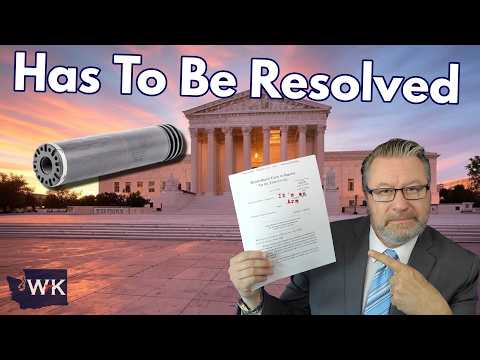
Supreme Court Denial Order Upholds Unanimous Suppressor & NFA Decision! What Happens Now?

Published on May 12, 2026
Duration: 8:35

This video details the Supreme Court's denial of review in US v. Peterson, a significant challenge to the National Firearms Act (NFA) concerning suppressor restrictions. The denial means the Fifth Circuit's ruling upholding the NFA stands, and the plaintiff, Mr. Peterson, must surrender to federal prison. However, Peterson is pursuing a new legal avenue, alleging ineffective assistance of counsel due to his original attorney's failure to adequately argue Second Amendment rights, particularly in light of the Bruin decision. This ongoing litigation could still impact future NFA cases.

Quick Summary

The Supreme Court denied review of US v. Peterson, upholding the Fifth Circuit's decision that affirmed the National Firearms Act (NFA) regarding suppressor restrictions. This means Mr. Peterson, convicted for an unregistered solvent trap, must surrender to federal prison. He is now pursuing a claim of ineffective assistance of counsel, arguing his original defense failed to adequately present Second Amendment arguments, especially in light of the Bruin decision.

Chapters

  1. 00:01Supreme Court Denial of NFA Challenge
  2. 00:12Peterson Ordered to Surrender
  3. 00:25New Legal Challenge: Ineffective Counsel
  4. 01:26Background of US v. Peterson Case
  5. 02:00NFA Challenge and Second Amendment Argument
  6. 02:14Fifth Circuit Ruling and Reversal
  7. 02:42Fifth Circuit's Reasoning on NFA
  8. 03:15Appeal to the Supreme Court
  9. 03:34Supreme Court's Denial Order
  10. 03:49Peterson's Surrender Date Set
  11. 04:22Solvent Trap Classification
  12. 04:38Ineffective Assistance of Counsel Claim
  13. 05:03Impact of the Bruin Decision
  14. 05:56Bruin's Shift in Legal Analysis
  15. 06:33Impact of Supreme Court Denial
  16. 06:49Ongoing Litigation Possibilities
  17. 07:19Peterson Case Evolution

Frequently Asked Questions

What was the outcome of the Supreme Court's decision regarding the National Firearms Act (NFA) challenge in US v. Peterson?

The Supreme Court denied certiorari in US v. Peterson, meaning it refused to hear the case. This action upholds the Fifth Circuit's ruling, which affirmed the constitutionality of the NFA as it applies to suppressor restrictions, including those on solvent traps.

Why is Mr. Peterson being ordered to surrender to federal prison?

Mr. Peterson was convicted of violating the NFA for possessing an unregistered solvent trap, which the ATF classified as a suppressor. Following the Supreme Court's denial of his appeal, the Fifth Circuit's conviction stands, and he is now ordered to self-surrender to federal prison.

What is the new legal argument Mr. Peterson is pursuing?

Mr. Peterson is now challenging his conviction based on ineffective assistance of counsel. He argues his original attorney failed to adequately present Second Amendment arguments, particularly by not referencing the Supreme Court's Bruin decision, which significantly altered legal analysis for firearm regulations.

How did the Fifth Circuit's ruling in US v. Peterson treat NFA suppressor regulations?

The Fifth Circuit essentially treated the NFA's suppressor regulations like a 'shall issue' licensing system. The court suggested that as long as the government processes applications objectively and avoids broad discretionary authority, such regulations can be constitutional, even for protected arms.

What is the significance of the Bruin decision in relation to the Peterson case?

The Bruin decision, issued by the Supreme Court, reshaped Second Amendment jurisprudence by rejecting interest-balancing tests and requiring historical tradition to justify firearm regulations. Peterson's legal team argues that failing to invoke Bruin during his original defense constitutes ineffective assistance of counsel.

Related News

All News →

More 2nd Amendment & Law Videos You Might Like

More from Armed Scholar

View all →