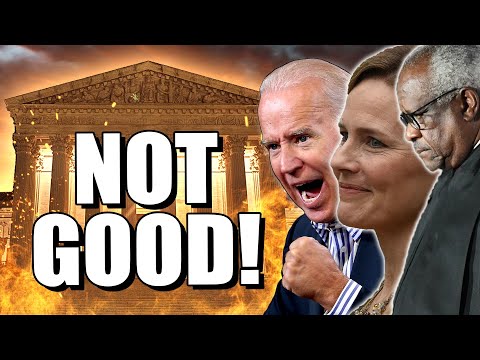
Supreme Court New 6-3 Decision Backs Suppressor Freedom Law Removing NFA Restrictions!

Published on June 7, 2024
Duration: 9:43

This video provides an expert-level analysis of the Supreme Court's 6-3 decision impacting suppressor freedom laws, specifically focusing on the Texas Suppressor Freedom Lawsuit (Paxton v. Dettelbach). It details the legal arguments surrounding Texas House Bill 957, which aims to exempt Texas-made suppressors from federal regulation by asserting they do not fall under interstate commerce. The discussion highlights the ATF's opposition, the concept of legal standing, and the implications of the Bruen decision on challenging federal regulations.

Quick Summary

The Supreme Court's 6-3 decision in Labrador v. Poe ruled that universal injunctions cannot be placed against a state's law. This impacts cases like the Texas Suppressor Freedom Lawsuit (Paxton v. Dettelbach), which challenges federal regulation of Texas-made suppressors under HB 957 by arguing they are not subject to interstate commerce.

Chapters

  1. 00:00Supreme Court and Texas Suppressor Freedom Lawsuit
  2. 00:19Texas Suppressor Freedom Lawsuit Discussion
  3. 00:44Paxton vs. Dettelbach Case Details
  4. 01:215th Circuit Appeal and Injunctive Relief
  5. 02:08Texas House Bill 957
  6. 02:31ATF Response and NFA Enforcement
  7. 03:18Concept of Standing and Injury
  8. 03:59Requirements to Show Standing
  9. 04:52ATF Argument and Second Amendment
  10. 05:36ATF Beliefs and Supreme Court Decision
  11. 06:12Bruen Decision and Universal Relief
  12. 07:29State Laws vs. Federal Government
  13. 08:41Fifth Circuit Decision

Frequently Asked Questions

What was the Supreme Court's 6-3 decision regarding suppressor freedom?

The Supreme Court issued a 6-3 decision that impacts Second Amendment cases, specifically addressing the Texas Suppressor Freedom Lawsuit. This ruling outlined that a universal injunction cannot be placed against a state's law, influencing how lower courts can block state enforcement.

What is Texas House Bill 957 and how does it relate to federal regulation?

Texas House Bill 957 aimed to exempt suppressors manufactured and remaining within Texas from federal regulation. The argument is that these items, made and sold exclusively within the state, do not fall under interstate commerce and therefore are outside the ATF's federal regulatory authority.

What is the legal concept of 'standing' in the context of suppressor lawsuits?

Standing requires plaintiffs to demonstrate a direct injury or a credible threat of enforcement from the ATF to bring a lawsuit. Simply disagreeing with federal policy is insufficient; plaintiffs must show they have been harmed or are imminently likely to be harmed by the ATF's actions.

How does the ATF view suppressors in relation to the Second Amendment?

The ATF argues that suppressors are firearm accessories, not arms protected by the Second Amendment. They contend the Second Amendment extends only to bearable arms typically possessed by law-abiding citizens for lawful purposes, and a silencer does not fit this definition.

Related News

All News →

More 2nd Amendment & Law Videos You Might Like

More from Armed Scholar

View all →