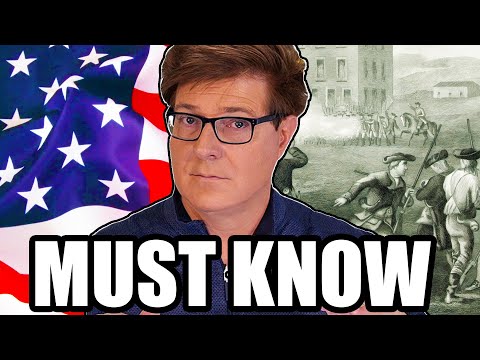
The Boston Massacre: The Shot That Sparked the American Revolution

This video from Guns & Gadgets delves into the historical context and aftermath of the Boston Massacre. It highlights the escalating tensions between British soldiers and Boston colonists, the events of March 5, 1770, the subsequent trial, and the significant impact of Paul Revere's engraving as revolutionary propaganda. The analysis emphasizes the event's role as a catalyst for the American Revolution.

Quick Summary

The Boston Massacre, occurring on March 5, 1770, was a pivotal event fueled by escalating tensions between British soldiers and Boston colonists over taxation and occupation. While five colonists were killed, the subsequent trial and Paul Revere's influential propaganda engraving transformed the incident into a potent symbol of British tyranny, significantly contributing to the revolutionary fervor that led to American independence.

Chapters

  1. 00:00Introduction to Boston Massacre
  2. 00:29Precursors to the Massacre
  3. 01:16Boston Under Occupation
  4. 02:14Escalation to Conflict
  5. 03:14The Fatal Shots
  6. 03:47Victims and Symbolism
  7. 04:32The Trial and Due Process
  8. 06:11Paul Revere's Propaganda
  9. 07:04Long-term Impact on Revolution
  10. 08:24Conclusion: A Catalyst for Revolution

Frequently Asked Questions

What were the main causes leading up to the Boston Massacre?

Rising tensions were fueled by British taxation policies like the Stamp Act and Townshend Acts, economic pressures, and the military occupation of Boston by 2,000 British soldiers in a city of 16,000, creating constant friction with colonists.

Who was killed in the Boston Massacre?

Five colonists died: Crispus Attucks, Samuel Gray, James Caldwell, Samuel Maverick, and Patrick Carr. Six others were wounded. Crispus Attucks, of African and Native American descent, is often considered the first casualty of the Revolution.

How did Paul Revere's engraving influence the Boston Massacre?

Paul Revere's engraving depicted a one-sided slaughter of innocent colonists by British soldiers. This powerful, albeit inaccurate, propaganda spread rapidly, inflaming colonial opinion and galvanizing support for the revolutionary cause.

What was the outcome of the trial for the British soldiers involved in the Boston Massacre?

John Adams defended the soldiers. Captain Thomas Preston and six soldiers were acquitted. Privates Hugh Montgomery and Matthew Kilroy were convicted of manslaughter, branded on the thumb, and released, showcasing a commitment to due process amidst public outrage.

Related News

All News →

More 2nd Amendment & Law Videos You Might Like

More from Guns & Gadgets 2nd Amendment News

View all →