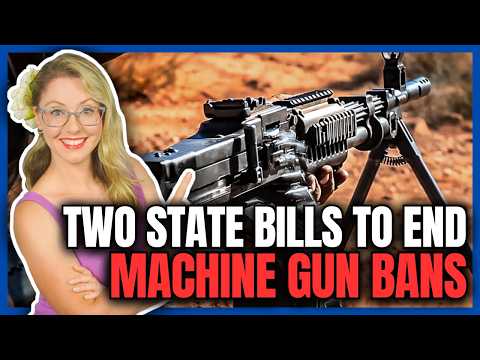
The State That Wants to Legalize Machine Guns

Published on February 25, 2026
Duration: 12:24

This video from Washington Gun Law explores West Virginia's SB 1071, a bill aiming to legalize machine gun sales by leveraging exemptions in federal law, specifically 18 U.S.C. 922(o). The legislation proposes that transfers and possession of machine guns by eligible citizens would be 'deemed to have been made by the State' and 'under the authority of the State,' creating an Office of Public Defense to facilitate these transfers. The expert analysis highlights potential legal challenges, particularly concerning judicial interpretation of 'under the authority of the state' and citing precedent like United States v. Warner, which suggests state permission alone isn't sufficient for federal exemption.

Quick Summary

West Virginia's SB 1071 aims to legalize machine gun sales by arguing that state-facilitated transfers and possession fall under federal exemptions in 18 U.S.C. 922(o). The bill proposes that these actions are 'deemed to have been made by the State' and 'under the authority of the State,' though legal precedent like U.S. v. Warner may challenge this interpretation.

Chapters

  1. 00:07Introduction: States vs. Pro-2A States
  2. 00:42West Virginia's SB 1071: Machine Gun Legalization
  3. 01:13Federal Machine Gun Restrictions Explained
  4. 01:59State's Argument for Transfers Under Authority
  5. 02:39Transferee Considerations and Office of Public Defense
  6. 03:31Eligibility for Machine Gun Ownership
  7. 04:00Types of Firearms and Program Expenses
  8. 04:47Process for Transferring Machine Guns
  9. 05:13Questioning the Legality of SB 1071
  10. 07:13DOJ's Likely Stance and Legal Framework
  11. 07:55Legislature Exemptions vs. Case Law (US v. Warner)
  12. 09:15Court Intentions and Final Message on 2nd Amendment

Frequently Asked Questions

What is West Virginia Senate Bill 1071?

West Virginia SB 1071 is legislation proposing to legalize the sale of machine guns within the state. It aims to achieve this by leveraging exemptions in federal law, specifically 18 U.S.C. 922(o), by deeming state-facilitated transfers and possession as being 'under the authority of the State.'

How does West Virginia SB 1071 attempt to bypass federal machine gun laws?

The bill argues that transfers and possession of machine guns by eligible citizens are 'deemed to have been made by the State' and 'under the authority of the State.' This interpretation is intended to fit within the federal exemption in 18 U.S.C. 922(o)(2)(A), which applies to transfers or possession by or under the authority of a state agency.

What are the potential legal challenges to West Virginia's machine gun legalization bill?

The primary legal challenge lies in the interpretation of 'under the authority of the state.' Case law, such as United States v. Warner, suggests that merely having state permission does not equate to being under state authority for federal exemption purposes, potentially leading to court battles with the DOJ.

What types of machine guns are included in West Virginia's SB 1071 proposal?

The bill specifies that machine guns acquired and transferred would be similar to those currently in use by law enforcement or the U.S. Armed Forces. This includes models like AR-15/M-16 platform, M249-type, and MP5-type machine guns, with the Director having the ability to add others.

More 2nd Amendment & Law Videos You Might Like

More from Washington Gun Law

View all →