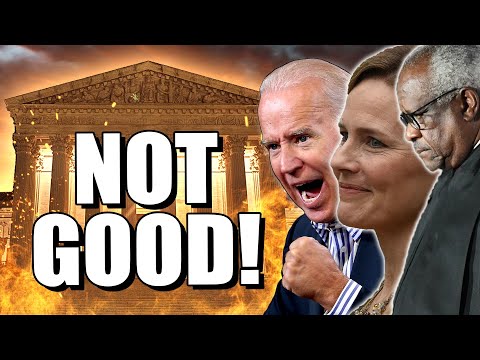
U.S. Supreme Court Makes Game Changing Second Amendment & ATF Move!

Published on February 29, 2024
Duration: 10:39

This video provides an expert-level analysis of the Supreme Court's oral arguments in Cargill v. Garland, a pivotal case concerning the ATF's regulation of bump stocks. The discussion delves into the legal definitions of machine guns under the NFA and GCA, the role of statutory interpretation and judicial deference, and the potential implications for Second Amendment rights. The speaker, an expert in firearms law, offers a cautiously pessimistic outlook based on the justices' questioning.

Quick Summary

The Supreme Court case Cargill v. Garland examines if bump stocks are machine guns under the NFA/GCA. The core debate centers on interpreting 'single function of the trigger.' The Fifth Circuit ruled against the ATF, stating Congress must change the law. Justices showed concern over ATF's shifting interpretations and the definition's ambiguity.

Chapters

  1. 00:00Supreme Court Hears ATF Case
  2. 00:39Background: ATF's Bump Stock Ban
  3. 01:22Key Legal Questions
  4. 02:15Fifth Circuit's Ruling
  5. 03:04Congress's Role in Changing Law
  6. 03:20Supreme Court Oral Arguments
  7. 03:54Speaker's Initial Impressions
  8. 04:54Pro-2A vs. ATF on 'Function'
  9. 06:00Textualism and Statutory Interpretation
  10. 07:22Justices' Understanding & Concerns
  11. 08:41Justice Barrett's Sympathy for ATF
  12. 09:22Prediction & Conclusion

Frequently Asked Questions

What is the main legal issue in the Supreme Court case Cargill v. Garland regarding bump stocks?

The central issue is whether bump stocks qualify as 'machine guns' under the National Firearms Act (NFA) and Gun Control Act (GCA). This hinges on the interpretation of the statutory definition, particularly the phrase 'single function of the trigger.'

What was the Fifth Circuit's ruling on bump stocks and the ATF's authority?

The Fifth Circuit ruled that the ATF exceeded its authority by classifying bump stocks as machine guns. They determined that a plain reading of the statute excludes bump stocks, and any changes to include them must come from Congress.

How did the Supreme Court justices seem to interpret the 'single function of the trigger' clause?

Several justices, including Gorsuch and Alito, appeared to focus on the mechanical definition of 'function' as distinct from 'pull.' They expressed concerns about the ATF's shifting interpretations and the potential impact on gun owners.

What is the significance of Chevron deference and the Rule of Lenity in the bump stock case?

These doctrines are crucial for interpreting statutory ambiguity. Chevron deference favors agency interpretations, while the Rule of Lenity favors narrower interpretations in criminal statutes. The Court's decision on which to apply, or if ambiguity exists, will significantly impact the outcome.

Related News

All News →

More 2nd Amendment & Law Videos You Might Like

More from Armed Scholar

View all →