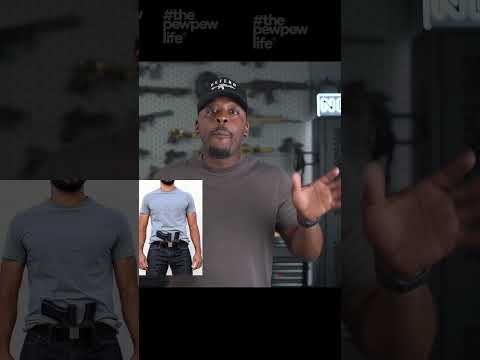
7 Things To Consider Before Getting Your Concealed Carry Permit and Carrying Concealed

Published on August 3, 2022
Duration: 8:15

This guide, presented by Myles from Tactical Hyve, outlines seven crucial considerations before obtaining a Concealed Carry Weapon (CCW) permit. It emphasizes mastering firearm safety, seeking professional training beyond minimum requirements, and testing various handguns for personal fit. The guide also stresses the importance of understanding state reciprocity laws, specific gun-free zones, daily carrying challenges, and the value of force-on-force training for realistic scenario preparation.

Quick Summary

Before getting a Concealed Carry Permit (CCW), master the four universal firearm safety rules and seek professional training beyond minimum requirements. Test various handguns at a range to find the best fit, and thoroughly research state reciprocity laws and specific 'gun-free zones' to ensure legal compliance.

Chapters

  1. 00:00Introduction & Safety Rules
  2. 01:18Beginner's Firearms Course
  3. 02:21Trying Different Pistols
  4. 03:34State Reciprocity Research
  5. 04:34Specific State Laws (Gun-Free Zones)
  6. 05:22Personal Challenges & Obstacles
  7. 06:33Force-on-Force Training

Frequently Asked Questions

What are the four universal firearm safety rules?

The four universal firearm safety rules are: 1. Point in a safe direction. 2. Treat every gun as loaded. 3. Keep your finger off the trigger until ready to shoot. 4. Know your target and what is beyond it. These are fundamental for safe firearm handling.

Why is it important to take a formal beginner's firearms course?

A formal course provides professional instruction on proper fundamentals and safe manipulation, helping to correct dangerous habits often learned from informal sources and ensuring a solid foundation for responsible firearm ownership.

How can I choose the right handgun for concealed carry?

It's recommended to rent and test various handgun models at a range. This allows you to assess comfort, fit for your body type, and shooting style, as performance and ergonomics vary significantly between different platforms.

What is firearm reciprocity and why is it important for concealed carry?

Reciprocity means states recognize each other's concealed carry permits. Understanding these laws is crucial for legal compliance when traveling, as carrying in a state without reciprocity can lead to severe penalties.

Related News

All News →

More EDC & Lifestyle Videos You Might Like

More from Tactical Hyve

View all →