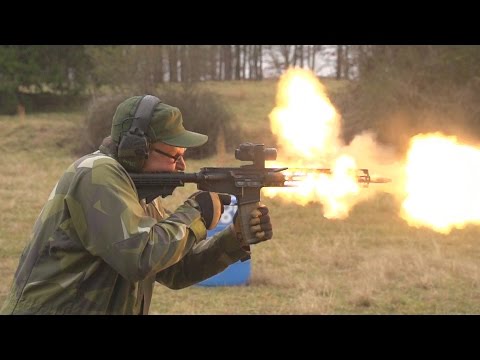
Firearms Facts: "The Law of Diminishing Returns"

Published on June 28, 2021
Duration: 34:17

This video explores the 'law of diminishing returns' as it applies to firearms, covering both financial and performance aspects. Hosts Eric and Chad discuss how excessive spending on upgrades may yield minimal actual improvement, the trade-offs between lightweight firearms and recoil, and the concept of choosing the right tool for the job. They use examples like customized Ruger Chargers, hunting rifles, and lightweight revolvers to illustrate how perceived value can diverge from actual performance gains.

Quick Summary

The law of diminishing returns in firearms means that as you invest more in upgrades, the performance or value gains become smaller. This applies to both financial costs and physical properties like recoil. For example, a lightweight Scandium-frame .44 Magnum might be easy to carry but brutal to shoot, representing a diminishing return on its lightweight design.

Chapters

  1. 00:00Introduction to Diminishing Returns in Firearms
  2. 00:48Defining the Law of Diminishing Returns
  3. 01:19Financial vs. Performance Diminishing Returns
  4. 03:40Example: Upgraded Ruger Charger Pistol
  5. 06:0510/22 and Charger Platform Upgrades
  6. 08:49Example: Ruger M77 Hunting Rifle and Recoil
  7. 10:12Weight vs. Recoil in Hunting Rifles
  8. 13:01Extreme Cartridges and Diminishing Returns
  9. 13:14Choosing the Right Tool for the Job
  10. 15:35Example: Entry-Level vs. Premium Bolt Actions
  11. 18:17Intended Use and Firearm Value
  12. 21:16Example: Scandium Frame Revolver Recoil
  13. 24:43Scandium Frame Usefulness vs. Drawbacks
  14. 28:32Example: Performance Center 9L Handgun
  15. 30:33Weighting Competition Guns
  16. 31:18Cost vs. Value Paradigm
  17. 32:31Factory vs. Gradual Upgrades
  18. 33:09Recoil, Weight, and Materials
  19. 33:33Conclusion: No Free Lunch in Physics

Frequently Asked Questions

What is the law of diminishing returns in the context of firearms?

The law of diminishing returns in firearms refers to situations where the financial investment or effort put into upgrades yields progressively smaller improvements in performance, accuracy, or value. It highlights that beyond a certain point, further modifications may not be cost-effective or practically beneficial.

How does firearm weight affect recoil and performance?

Lighter firearms, especially those chambered in powerful cartridges, tend to have more felt recoil. While lightweight designs are easier to carry, excessive recoil can negatively impact accuracy and shooter comfort, representing a diminishing return on the benefit of reduced weight.

When is it considered overkill to use a powerful firearm or cartridge?

Using a firearm or cartridge significantly more powerful than necessary for the intended task, such as a .300 Win Mag for short-range deer hunting, is considered overkill. This scenario exemplifies diminishing returns because the firearm's full capabilities are not utilized, and the added recoil or cost offers no practical advantage.

Are expensive firearm upgrades always worth the cost?

Not necessarily. While some upgrades offer substantial improvements, the law of diminishing returns suggests that beyond a certain point, the cost of further enhancements may outweigh the marginal gains in performance or value. It's crucial to perform a cost-benefit analysis based on individual needs and expectations.

How do materials like Scandium affect handgun performance?

Scandium-alloy frames make handguns significantly lighter, improving carryability. However, this lightness can lead to brutal recoil with powerful magnum loads, potentially making the firearm difficult to shoot accurately. This trade-off illustrates diminishing returns where extreme lightness compromises shootability.

More General Videos You Might Like

More from Iraqveteran8888

View all →