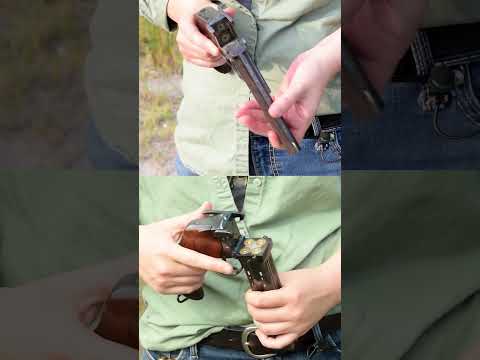
History of WWI Primer 131: Dutch 1895 KNIL Documentary

Published on September 29, 2020
Duration: 53:58

This video details the history and variations of the Dutch M1895 rifle and carbine as used by the Royal Dutch East Indies Army (NIL). It covers the context of colonial conflicts like the Aceh War, the specific modifications made to the rifles for jungle warfare and indigenous troops, and the evolution of carbine designs for different branches like the cavalry and Marechaussee. The video highlights the challenges of adapting a European rifle design to a tropical environment and the extensive modifications undertaken.

Quick Summary

The Dutch M1895 rifle and carbine underwent significant modifications for use by the Royal Dutch East Indies Army (NIL), adapting them for colonial warfare. Challenges included their length and weight for jungle environments, leading to lighter versions, shorter barrels, and lower sight zeros. Carbines evolved with features like bent bolts for cavalry and modified sling points for infantry, demonstrating early modularity.

Chapters

  1. 00:00Introduction: Dutch M1895 in the East Indies
  2. 00:29Matthias Introduces the NIL M1895
  3. 00:55Caliber: 6.5x53mm Rimmed
  4. 01:26Historical Context: Dutch East Indies
  5. 02:41The Aceh War and Colonial Campaigns
  6. 04:02Royal Dutch East Indies Army (NIL)
  7. 04:37Development of the M1895 Long Rifle for NIL
  8. 05:35Officer Dissatisfaction with Long Rifles
  9. 06:41Lombok Intervention and Repeating Rifles
  10. 08:11NIL M1895 Adoption and Modifications
  11. 08:43Double-Edged Bayonet Pattern
  12. 09:02Production Numbers and Manufacturers
  13. 09:42Challenges of the NIL Rifle's Role
  14. 10:43Bayonet Lug Issues and Scrapping
  15. 10:551904 Pattern Lightened Rifle
  16. 12:16Funding Issues and Machine Gun Trade-off
  17. 13:10No Shortening Program for NIL M1895
  18. 13:171911 Simplified Lightening Program
  19. 13:28Detailed Look at the 1911 NIL M1895
  20. 14:36Rear Sight and Gas Escape Holes
  21. 15:54Unit Designating Plate Cutout
  22. 16:32Environmental Impact on Wood Stocks
  23. 17:07Canvas Webbing Slings
  24. 17:20NIL Doctrine Changes
  25. 17:46The 1895-11 NIL Rifle
  26. 19:22Comparison: NIL vs. Continental M1895
  27. 19:31Early NIL Carbine Investigations (1893)
  28. 20:05Combat Service of Early Carbines
  29. 20:36Adopted Cavalry Carbine Pattern
  30. 21:011897 Carbine Order and Requisition
  31. 21:20Marechaussee Carbines (M95)
  32. 22:24Carbine Modifications for Infantry
  33. 23:05Effectiveness of Marechaussee Carbines
  34. 23:45Cavalry Carbine Production Estimates
  35. 24:00Evolution of Cavalry Carbine Carrying Methods
  36. 24:28Post-1899 Cavalry Carbine Modifications
  37. 24:53Skeletonized Butt Plates (c. 1902)
  38. 25:03Experimental Carbines for Cyclists (1902)
  39. 25:41Artillery Carbine Development (1904)
  40. 26:17Artillery Carbines Stolen by Marechaussee
  41. 26:44Modification of Artillery Carbines
  42. 27:34Conversion of Artillery Carbines to Marechaussee Pattern (1938)
  43. 27:55Cavalry Carbines Used by Other Units
  44. 28:221912 Cavalry Carbine Order with Bayonet Lug
  45. 28:52Detailed Look at a Cavalry Carbine
  46. 30:39Mismatched Serial Numbers and Modifications
  47. 30:50Turn-down Bolt and Gas Escape Vents
  48. 31:06Skeletonized Butt Plate
  49. 31:21NIL Steel Ribbon Slings
  50. 31:491930s Update: Quick Detach Sling Point
  51. 32:28Stock Modifications and Unit Markings
  52. 33:38Artillery Carbine Conversions for Engineers (1915)
  53. 34:30KAR Marking for Carbines
  54. 34:48Summary of Dutch M1895 Variations
  55. 35:03Service Life and Marechaussee Dominance
  56. 35:30M1895 Facing World War II Threats
  57. 35:49Japanese Invasion and Dutch Resistance
  58. 36:44Japanese Use and Modification of Dutch Carbines
  59. 36:53Conversion to .303 British
  60. 37:36Review of Covered M1895 Variations
  61. 38:01Modularity and Flexibility of the M1895 System
  62. 38:31May's Feel on the NIL M1895
  63. 39:42NIL M1895 vs. Continental M1895 Feel
  64. 40:08Key Differences: Gas Escape Holes, Finger Rest
  65. 40:41Weight Difference and Comfort
  66. 41:33Lower Zero and Aiming Point
  67. 42:13Action, Trigger, Recoil Comparison
  68. 42:27Wood Density and Moisture Absorption
  69. 43:38Last Cavalry Carbine Variation (Not Fired)
  70. 44:14Indonesian Carbine Modifications
  71. 44:46Skeletonized Butt Plate Aesthetics
  72. 45:11Original Half-Stocked Cavalry Carbine
  73. 45:32Turn-down Bolt vs. Straight Bolt Preference
  74. 46:48Bolt Manipulation and Ease of Use
  75. 47:51Bolt Locking Mechanism
  76. 48:07NIL Carbine in Tropical Environments
  77. 49:17Japanese Use and .303 Conversions
  78. 49:44Indonesian .303 Conversion Example
  79. 50:30Parallel Evolution: 6.5mm to 7.7mm
  80. 51:05Conclusion: Endless Dutch Carbine Variations
  81. 51:14Thanks to Matthew and Boss
  82. 52:40Uncatalogued NIL Carbine Variations
  83. 53:14Patreon/SubscribeStar Updates
  84. 53:31Upcoming Special Episode

Frequently Asked Questions

What were the main challenges faced by the Dutch M1895 rifle in the East Indies?

The Dutch M1895 rifle was initially too long and heavy for indigenous troops in the Dutch East Indies, making it difficult to maneuver in dense jungle environments. Its 400-meter zero was also impractical for the close-quarters combat common in the region, leading to demands for shorter barrels and lower sight settings.

How did the Dutch M1895 carbine evolve for different NIL units?

The NIL M1895 carbine saw significant evolution. Cavalry models featured bent bolt handles to prevent snagging, while Marechaussee (infantry) versions were modified with straight bolts and different sling attachments. Artillery carbines were developed with unique bayonet lugs but were often repurposed by other units.

What modifications were made to the NIL M1895 rifle to adapt it for colonial service?

Adaptations included a reduced rear sight zero (often 200 meters), a double-edged dagger-style bayonet, and later, lightening measures like removing the bayonet lug and cleaning rod, shortening the barrel and stock, and adding gas escape holes. Some rifles also featured cutouts for unit designation plates.

Why are many Dutch East Indies carbines found with mismatched serial numbers?

Many Dutch East Indies carbines exhibit mismatched serial numbers due to their extensive service lives in harsh tropical environments, frequent repairs, and post-war modifications by Indonesian forces. Parts were often scavenged and replaced, leading to a mix of components from different production runs and even other firearm types.

More General Videos You Might Like

More from C&Rsenal

View all →