Lee Enfield Fact or Fiction?

Published on January 4, 2020
Duration: 10:06

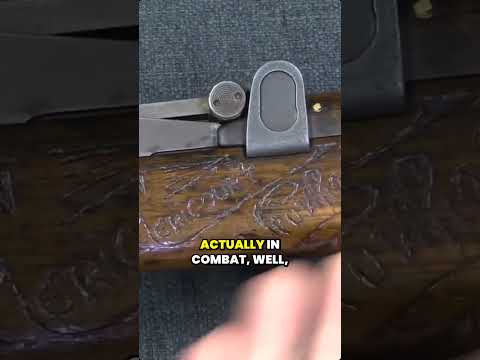
This video debunks common myths surrounding the Lee-Enfield rifle and its ammunition. It clarifies that soldiers did not commonly modify .303 bullets to create soft-point ammunition, nor were there specific holes for breaking firing pins. However, gas vent holes in the receiver are confirmed to be a safety feature against cartridge failures. The content is presented by "Deuce and Guns," aiming to educate viewers on the historical and technical realities of the Lee-Enfield.


Quick Summary

The small holes found on the receiver of some Lee-Enfield rifles are confirmed to be gas vents, designed to safely redirect excess gas away from the shooter's face in case of a cartridge failure. This is a genuine safety feature, unlike the myth that there's a specific hole for breaking firing pins.

Chapters

  1. 00:00Introduction: Lee-Enfield Fact or Fiction
  2. 00:34Story 1: Modifying .303 for Soft Point Ammo
  3. 01:40Hague Convention and Ammunition Rules
  4. 02:31Impromptu Soft Point Ammo Creation
  5. 03:02Story 2: Gas Vent Holes in Receiver
  6. 03:54Story 3: Firing Pin Breaking Hole
  7. 04:52Reveal: Soft Point Ammo Myth Debunked
  8. 06:50Reveal: Gas Vent Holes Confirmed True
  9. 07:19Reveal: Firing Pin Breaking Hole Debunked
  10. 09:12Conclusion and Outro

Frequently Asked Questions

Did British soldiers in WWI and WWII modify .303 bullets to create soft-point ammunition?

No, this is largely a myth. While some individuals might have attempted it, it was not a common or intended practice. The rifle's magazine cutoff lever and receiver holes lacked the necessary force to effectively cut bullet tips, and the steel core in many .303 bullets made them difficult to deform.

What is the purpose of the small holes drilled in the receiver of a Lee-Enfield rifle?

These holes are gas vents. Their primary function is to safely divert excess gas away from the shooter's face in the event of a cartridge failure or blow-out within the chamber, significantly enhancing shooter safety during operation.

Was there a specific hole on the Lee-Enfield designed for breaking the firing pin?

No, this is a myth. The hole often cited for this purpose is actually a manufacturing feature that helps create a clean radius for the stripper clip guide. British soldiers were not trained to use it for breaking firing pins.

What was the significance of the Hague Convention of 1899 regarding ammunition?

The Hague Convention of 1899 prohibited the use of expanding or flattening ammunition during warfare. This was generally understood to include hollow-point and soft-point bullets, impacting the types of ammunition that could be legally employed in combat.

More General Videos You Might Like

More from DEUCE AND GUNS

View all →