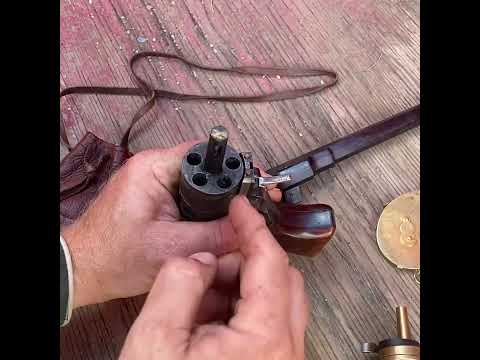
The USA is Obsessed with .45

Published on January 7, 2026
Duration: 15:12

This video provides a historical deep dive into the American obsession with the .45 caliber cartridge, tracing its lineage from 1850s revolvers to the modern .45 ACP. It details the evolution of .45 caliber ammunition, including the Colt Dragoon, Colt Walker, 1860 Colt Army, Colt Single Action Army, and the Schofield revolver, highlighting ballistic differences and ammunition compatibility issues. The presenter argues that the practical effectiveness of the .45 caliber has remained remarkably consistent throughout its history.

Quick Summary

The American obsession with .45 caliber cartridges spans from the 1850s revolvers to the modern .45 ACP. Early .44 caliber revolvers were actually .45, and the .45 Colt offered significant power. Despite ammunition compatibility issues and the introduction of the .45 ACP, the practical effectiveness of the .45 caliber has remained remarkably consistent.

Frequently Asked Questions

When did the US military first adopt a .45 caliber cartridge?

The US military's adoption of .45 caliber cartridges dates back to the 1873 adoption of the Colt Single Action Army chambered in .45 Colt. Prior to that, revolvers like the Colt Dragoon and Walker, though called .44 caliber, were effectively .45 caliber by modern standards.

What is the difference between .45 Colt and .45 ACP?

.45 Colt is a rimmed cartridge designed for revolvers, historically using larger powder charges and heavier bullets. .45 ACP (Automatic Colt Pistol) is a rimless cartridge designed for semi-automatic pistols like the 1911, offering similar ballistic performance with modern smokeless powder.

Why were early .45 caliber cartridges considered too powerful?

Early .45 caliber cartridges, such as the .45 Colt with a 40-grain black powder charge and 255-grain bullet, generated significant recoil. This power level was often too much for average soldiers, leading to flinching and reduced shooting accuracy.

How did ammunition incompatibility affect US Army operations?

The adoption of both the Colt Single Action Army (.45 Colt) and the Schofield revolver (.45 S&W) created major logistical problems. The .45 Colt rounds wouldn't fit in Schofield revolvers, and .45 S&W rounds had larger rims that limited capacity in the Colt SAA, leading to soldiers being unable to use issued ammunition.

Related News

All News →

More General Videos You Might Like

More from InRangeTV

View all →