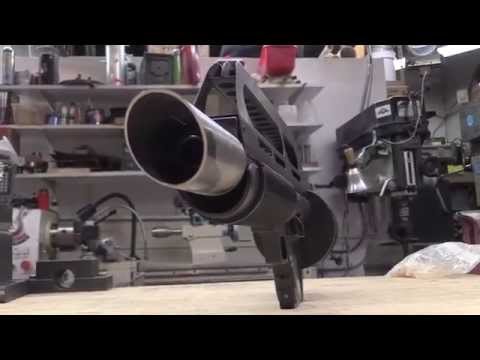
1908 Japanese Hino Komura Pistol

Published on February 26, 2012
Duration: 4:48

This guide details the unique operation and disassembly of the 1908 Hino-Komura Pistol, a rare Japanese design. It covers the blow-forward action, loading procedure, and the simple construction featuring a fixed firing pin. The video highlights the inventor's youth and the pistol's impracticality, offering insights from a recognized expert in historical firearms.

Quick Summary

The 1908 Hino-Komura Pistol is a rare Japanese firearm distinguished by its unique blow-forward action, where the barrel moves forward to cycle the mechanism. It was designed by Hino at a young age and features a simple construction with a fixed firing pin and a grip safety. Available in calibers like .32 ACP, it offered magazine capacities from 8 to 15 rounds.

Chapters

  1. 00:14Introduction to the Hino-Komura
  2. 00:40Calibers and Capacity
  3. 01:08Blow-Forward Action Explained
  4. 01:36Loading and Firing Mechanism
  5. 02:52Disassembly and Construction
  6. 03:57Final Assessment

Frequently Asked Questions

What is the unique operating mechanism of the 1908 Hino-Komura Pistol?

The 1908 Hino-Komura Pistol features a rare blow-forward action. Unlike most pistols where the slide moves backward, the barrel of the Hino-Komura moves forward to cycle the action, eject the spent casing, and chamber a new round.

What calibers and magazine capacities were available for the Hino-Komura?

The Hino-Komura pistol was chambered in calibers ranging from 5mm to 8mm Nambu, with .32 ACP being a common option. Magazine capacities varied, typically holding between 8 to 15 rounds, with designs similar to Nambu or Luger magazines.

How is the Hino-Komura pistol loaded and fired?

To load, the user pulls the barrel forward. Firing is accomplished by depressing a grip safety and the trigger, which causes the barrel to slam back onto a fixed firing pin, completing the cycle.

What are the key construction features of the Hino-Komura?

The Hino-Komura pistol is noted for its simplicity. It has very few parts, with the outer 'barrel' serving as a shroud. The receiver and grip frame are a single metal piece, and it features a fixed firing pin.

More Gunsmithing & DIY Videos You Might Like

More from Forgotten Weapons

View all →