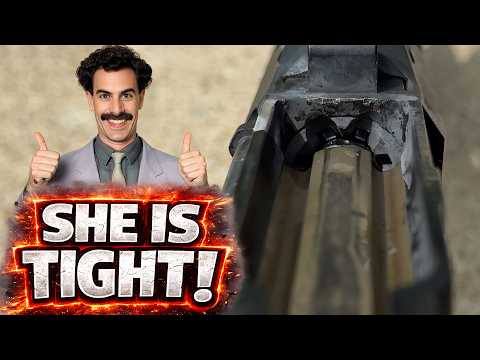
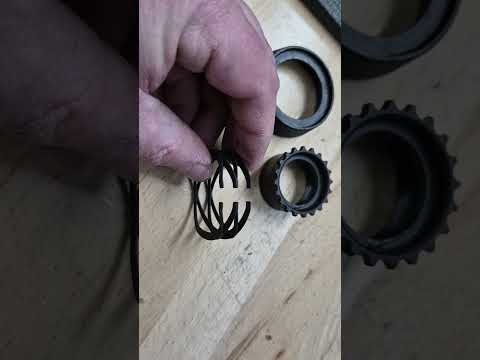
.300 Blackout AR-15 Barrel Change

Published on January 26, 2016
Duration: 4:50

This video details the process of changing an AR-15 barrel to .300 Blackout, highlighting that only the barrel needs replacement. It covers essential tools like an action block and armorer's wrench, and emphasizes critical steps such as verifying headspace before installing the new barrel. The demonstration uses a Brownells B-TAC 16-inch carbine barrel with a 1:8 twist rate.

Quick Summary

Converting an AR-15 from 5.56/.223 to .300 Blackout requires only a barrel change, as the bolt and magazine are compatible. Essential tools include a vise, action block, armorer's wrench, and headspace gauges. Always verify headspace after installation for safe operation.

Chapters

  1. 00:00Intro to .300 Blackout AR-15 Conversion
  2. 00:35Brownells B-TAC .300 Blackout Barrel Specs
  3. 00:50Essential Tools for Barrel Change
  4. 01:44Disassembly: Upper Receiver Prep
  5. 02:42Removing the Old AR-15 Barrel
  6. 03:29Installing the New .300 Blackout Barrel & Headspace
  7. 04:12Final Assembly and Brownells Guarantee

Frequently Asked Questions

Can I convert my 5.56/.223 AR-15 to .300 Blackout?

Yes, converting an AR-15 from 5.56/.223 to .300 Blackout is straightforward. You only need to change the barrel; the bolt, magazine, and other core components remain compatible, making it a simple barrel swap.

What are the essential tools for changing an AR-15 barrel?

Key tools include a bench-mounted vise, an upper receiver action block to prevent damage, an AR-15 armorer's wrench for the barrel nut, a gas block roll pin punch kit, and crucially, headspace gauges for safety.

What is the correct torque specification for an AR-15 barrel nut?

The barrel nut should be tightened to a torque range of 35 to 80 foot-pounds. Ensure the nut is aligned correctly to accommodate the gas tube during installation.

Why is verifying headspace important when changing an AR-15 barrel?

Verifying headspace with gauges after installing a new barrel is critical for safety. Incorrect headspace can lead to firearm malfunctions, such as case ruptures or failures to fire, potentially causing injury.

Related News

All News →

More Gunsmithing & DIY Videos You Might Like

More from Brownells, Inc.

View all →