Anvil 066: 3 barrel drilling, loose stock repair

Published on August 1, 2021
Duration: 40:39

This guide details the process of repairing a loose stock and cracked trigger guard on a pre-World War II German drilling. The primary cause identified is wood compression under the action, leading to a loose screw and subsequent stock movement. The repair involves inletting a brass washer to restore proper screw torque, repairing damaged wood with epoxy, and addressing the cracked trigger guard. The video emphasizes understanding the root cause of firearm issues rather than just treating symptoms.

Quick Summary

Repairing a loose stock on a pre-WWII German drilling involves addressing wood compression under the action, often by inletting a brass washer to restore proper screw torque. This prevents relative movement between the stock and action, which can cause damage like cracked trigger guards. The repair also involves fixing any damaged wood fibers with epoxy or Acra-Glass.

Chapters

  1. 00:05Introduction to the Drilling
  2. 00:40Identifying the Loose Stock and Trigger Guard Crack
  3. 01:24Demonstrating Stock Looseness
  4. 03:15Trigger Guard Material and Construction
  5. 04:55Root Cause Analysis: Loose Screw and Wood Compression
  6. 06:04Addressing Screw Interference
  7. 06:27Understanding Bedding Failure
  8. 08:05Stock Removal and Initial Inspection
  9. 09:30Firearm Material: Duralumin
  10. 10:28Receiver Separation and Wood Damage
  11. 11:19Repair Strategy: Brass Washer and Acra-Glass
  12. 12:06Common Drilling Damage Explained
  13. 13:38Upper Receiver Group Overview
  14. 15:04Aluminum Construction and Weight
  15. 16:52Lock Plate Mechanism and Hammers
  16. 19:31Set Trigger Mechanism Explained
  17. 20:57Acra-Glass Application for Wood Repair
  18. 23:37Stopping Oil Infiltration
  19. 24:13Inletting the Brass Washer
  20. 25:37Greener Safety Mechanism
  21. 26:23Barrel Features: Pop-up Rear Sight
  22. 27:28Poacher's Front Sight
  23. 28:03Proof Marks and Caliber Identification
  24. 30:00Trimming Acra-Glass Repair
  25. 33:28Inletted Brass Washer and Cleanup
  26. 34:53Final Stock Assembly and Fit Check
  27. 35:37Reassembling the Action
  28. 37:20Final Torqueing and Fitment
  29. 38:03Trigger Guard Reinstallation and Fit
  30. 39:37Function Test: Firing Modes
  31. 40:04Conclusion and Successful Repair

Frequently Asked Questions

What is the primary cause of a loose stock on older firearms like this German drilling?

The primary cause of a loose stock on older firearms, such as this German drilling, is often wood compression under the action. This compression can lead to a loose securing screw, allowing the stock to move relative to the action, which can then cause other issues like cracked trigger guards.

How can wood compression in a firearm stock be repaired?

Wood compression in a firearm stock can be repaired by inletting a precisely sized brass washer to take up the slack. This restores proper screw torque and prevents further movement. Damaged wood fibers can also be repaired using epoxy or Acra-Glass to fill voids and provide structural integrity.

What are the key features of this pre-WWII German drilling?

This pre-WWII German drilling features an anodized aluminum receiver, a horn trigger guard, and a Duralumin construction. It has two 16-gauge shotgun barrels over a rimmed 8mm Mauser rifle barrel, a Greener safety, and a unique pop-up rear sight system.

Why is it important to address a loose stock on a firearm?

A loose stock on a firearm is critical to address because it compromises accuracy and can lead to further damage. The movement can cause stress fractures in components like the trigger guard, and it prevents the firearm from functioning reliably and safely.

What is a 'poacher's front sight' on a firearm?

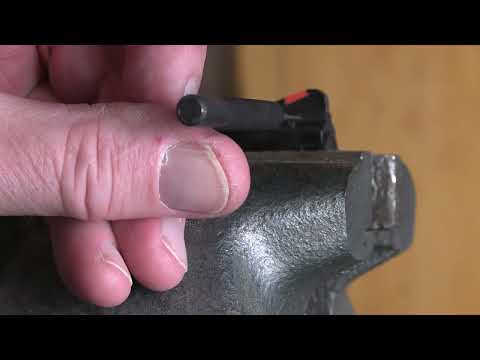
A 'poacher's front sight' is a specialized sight, as seen on this German drilling, that features a primary sight (like a white bead for shotgun use) which can be retracted or swiped down to reveal a secondary rifle sight, offering versatility for different shooting applications.

More Gunsmithing & DIY Videos You Might Like

More from Mark Novak

View all →