Anvil 077: Volcanic Activity

Published on January 21, 2020
Duration: 22:57

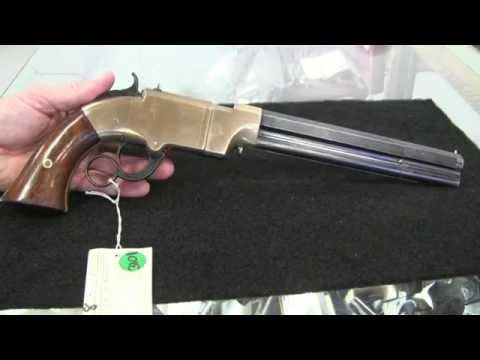
This video details the assembly and maintenance of a Volcanic pistol, highlighting its unique toggle-link action and rocket ball ammunition. It explains the mechanics of the magazine loading system, the function of the locking mechanisms, and the importance of proper conservation to prevent rust. The presenter emphasizes the historical significance of the Volcanic as a precursor to modern repeating firearms and discusses the inherent weaknesses of its toggle-link design compared to later lever-action systems.


Quick Summary

The Volcanic pistol features a toggle-link mechanism, an early design for repeating firearms, and uses unique 'rocket ball' ammunition. While historically significant, its toggle action is prone to wear and slop, making it less robust than later lever-action designs. The ammunition's mechanical sealing was also a significant limitation.

Chapters

  1. 00:05Introduction: Smith & Wesson's Idea
  2. 00:44Close-up: The Volcanic Pistol
  3. 00:50Unique Ammunition: Rocket Ball
  4. 00:58Toggle Link Action Explained
  5. 01:12Smith & Wesson's Early Involvement
  6. 01:21Oliver Winchester & Lever Actions
  7. 01:30Comparing Volcanic and 1866 Winchester
  8. 01:52Shell Lifter and Hammer Comparison
  9. 02:14Two-Piece Firing Train
  10. 02:39Toggle Action Comparison: 1866 vs. Volcanic
  11. 03:02The Intermediate Jump: Henry Rifle
  12. 03:14Conversion to Cartridges
  13. 03:221866 Winchester Slot Issue
  14. 03:43Inherent Weakness of Toggle Action
  15. 04:07John Moses Browning's Impact
  16. 04:17Why These Guns Are Considered Weak
  17. 04:22Slop and Wear in the 73 Action
  18. 04:54Ultimate Extrapolation: Rolling Block
  19. 05:04Bruno's Rolling Block Example
  20. 05:37The 1886 and John Browning
  21. 05:43Oblique View: Locking Blocks
  22. 06:03The 1895 and 7.62x54R
  23. 06:14Locking System Strength
  24. 06:27Rocket Ball Ammunition Details
  25. 06:45Anvil and Fulminate
  26. 06:52Cork Ring and Cap
  27. 07:00Black Powder Loading
  28. 07:04Footprint Limitation
  29. 07:16Focus Adjustment for Detail
  30. 07:23Sealing the Rear End
  31. 07:34Mechanical Sealing vs. Modern Ammo
  32. 07:46Modern Cartridge Blow-Up
  33. 07:57Mechanical Sealing Issues
  34. 08:02Magazine Limit Prediction
  35. 08:11Conservation Process
  36. 08:21Fully Conserved Volcanic Pistol
  37. 08:32High-Resolution Photographs
  38. 08:56Nose Cap and Follower Mechanism
  39. 09:05Magazine Spring
  40. 09:09Firing Train Components
  41. 09:13Toggles Locking Mechanism
  42. 09:15Lever and Block Interaction
  43. 09:20Trigger Guard/Cocking Piece
  44. 09:25Trigger Functioning as Sear
  45. 09:27Mainspring and Pins
  46. 09:31Detailed Look Before Shipping
  47. 09:39Lighting Update: Test Stand Construction
  48. 09:54Assembling the Volcanic Pistol
  49. 10:01Front End Assembly Oddity
  50. 10:07Rotating Part in Nose Cap
  51. 10:12Mushroomed Rivet Appearance
  52. 10:23Uncertainty on Assembly Method
  53. 10:29Light Conservation Process
  54. 10:40Minimal Rust, Needed Checking
  55. 10:44Rust Inside the Bolt
  56. 10:53Plunger Insertion
  57. 11:14Focus Adjustment During Assembly
  58. 11:24Low Dexterity Day
  59. 11:28Fine Threads Assembly
  60. 11:36Believed Assembly Process
  61. 11:41Part That Should Not Rotate
  62. 11:51Locking Mechanism Engagement
  63. 12:01Correction for Broken Part
  64. 12:14Plunger Pushing the Lock
  65. 12:16Lock Moving In and Out
  66. 12:25Lock Engaging Barrel Shroud Notch
  67. 12:33Lock Position Under Shroud
  68. 12:36Unlocked State and Rotation
  69. 12:44Demonstrating Assembly
  70. 12:47Magazine Spring Insertion
  71. 12:53Follower Orientation Check
  72. 13:01Follower Orientation Logic
  73. 13:11Adding More Light
  74. 13:13Spring Placement
  75. 13:21Sliding Assembly In
  76. 13:35Securing the Nose Cap
  77. 13:37Large and Small Screws
  78. 13:40Large Screw Placement
  79. 13:45Follower Retention Function
  80. 13:57Small Screw Insertion
  81. 14:11Front End Retaining Screw
  82. 14:30Fingers Feeling Large
  83. 14:38Screw Engaging Barrel Dimple
  84. 14:44Intended Operation: Loading
  85. 14:49Slide Forward, Lock Disengages
  86. 14:57Barrel Shroud Rotation
  87. 15:00Large Screw Prevents Ejection
  88. 15:05Loading Procedure: Rocket Balls
  89. 15:10Magazine Filling and Rotation
  90. 15:13Follower Drops
  91. 15:15Henry Action Similarity
  92. 15:19Assembly Complete, Working Correctly
  93. 18:49Volcanic: Beginning of Repeating Firearms
  94. 19:06Not Shooting the Volcanic
  95. 19:15Artifact Status
  96. 19:271866 Undergoing Cleaning
  97. 19:42Low Energy Output (56 Joules)
  98. 19:49Lack of Sealed Breach
  99. 19:56One Magazine Limit Prediction
  100. 20:00Still a Starting Point
  101. 20:03Cool Factor
  102. 20:28Update: Primer and Anvil Removal
  103. 20:34Timetable Acceleration
  104. 20:53Patron Support
  105. 20:59Historical Content
  106. 21:07Working on Cool Stuff
  107. 21:16Update Conclusion
  108. 22:39Finalizing Top Sections

Frequently Asked Questions

What is the primary mechanism of the Volcanic pistol?

The Volcanic pistol utilizes a toggle-link mechanism, which involves two-piece firing pins and links that collapse to open the action. This design was an early step towards repeating firearms and shares similarities with later lever-action rifles like the 1866 Winchester.

What type of ammunition did the Volcanic pistol use?

The Volcanic pistol fired a unique 'rocket ball' ammunition. This cartridge had a hollow base and contained an anvil, fulminate, a cork ring, and black powder. Its small size limited the powder charge, and its mechanical sealing was a significant drawback.

Why are Volcanic pistols and similar toggle-action firearms considered weak?

Toggle-action firearms are considered weak because their pins are loaded in sheer, not compression, leading to significant wear and slop over time. This design has many moving parts that can loosen, making them less robust for powerful cartridges or sustained firing compared to later designs.

How does the Volcanic pistol's magazine loading system work?

The Volcanic pistol's magazine is loaded by rotating a follower 90 degrees via a plunger in the nose cap. The magazine spring then pushes the follower up, and a retaining screw prevents it from ejecting when the gun is open. This system is similar to that found in the Henry rifle.

More Gunsmithing & DIY Videos You Might Like

More from Mark Novak

View all →