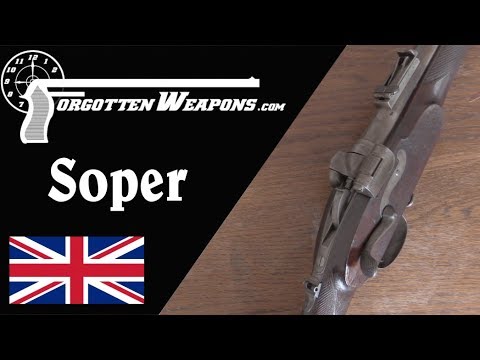
British Money-Walker 1868 Trials Rifle

Published on May 1, 2021
Duration: 7:24

This guide details the disassembly of the Money-Walker 1868 Trials Rifle, focusing on its unique falling block action. It highlights the process of removing the barreled action from the stock to expose the internal mechanism, offering insights into its historical design and operation. The information is presented with the authority of a firearms instructor knowledgeable in historical military procurement.

Quick Summary

The Money-Walker 1868 Trials Rifle was a contender in British military trials for a breech-loading rifle. It featured a distinctive top-lever falling block action but failed crucial reliability tests due to rust. Disassembly involves removing barrel bands and a trigger guard screw to access its internal mechanism.

Chapters

  1. 00:00Introduction and Historical Context
  2. 01:27External Features and Operation
  3. 03:25Disassembly and Internal Mechanism
  4. 05:30Trial Performance and Conclusion

Frequently Asked Questions

What was the Money-Walker 1868 Trials Rifle?

The Money-Walker 1868 Trials Rifle was one of ten firearms selected by the British military in the late 1860s for trials to find a replacement for their muzzle-loading rifles. It featured a unique top-lever operated falling block action.

How did the Money-Walker 1868 Trials Rifle perform in military trials?

In speed tests, it performed reasonably well, firing 20 rounds in 1 minute and 14 seconds, ranking 5th out of ten. However, it failed the crucial exposure test, where its mechanism rusted and seized when exposed to salt water and rain without lubrication.

What is unique about the Money-Walker 1868 Trials Rifle's action?

Its primary unique feature is the falling block action operated by a top lever. This design was a departure from the more common bottom-lever mechanisms seen in other contemporary firearms like the Martini-Henry rifle.

Can the Money-Walker 1868 Trials Rifle be easily disassembled?

Yes, disassembly is relatively straightforward. It involves removing the barrel bands and a single central screw in the trigger guard to separate the barreled action from the stock, revealing the internal mechanism.

More Gunsmithing & DIY Videos You Might Like

More from Forgotten Weapons

View all →