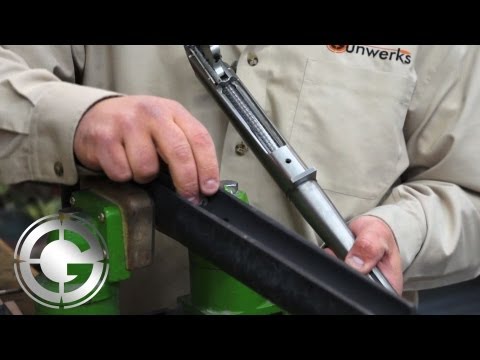
Chambering a Rifle Barrel

Published on February 10, 2011
Duration: 2:06

This video provides an expert-level guide to chambering a rifle barrel, a critical process for achieving long-range accuracy. It details the use of specialized tools like piloted reamers and boresopes, emphasizing extreme precision in centering the bore to within 0.0001 inches and controlling headspace. The instruction comes from Gunwerks, a premium custom rifle manufacturer, highlighting their high standards for gunsmithing.

Quick Summary

Chambering a rifle barrel requires extreme precision, with the most critical step being centering the bore to within 0.0001 inches. This ensures the bullet travels straight, maximizing accuracy. Essential tools include a lathe, dial indicator, piloted reamers, and a borescope for final inspection. Proper control of headspace is also vital for safety and consistent performance.

Chapters

  1. 00:00Introduction to Chambering
  2. 00:19Reamers and Throat Dimensions
  3. 00:34Centering the Bore
  4. 00:57The Machining Process
  5. 01:13Headspace and Gauging
  6. 01:29Polishing and Final Inspection

Frequently Asked Questions

What is the most critical step in chambering a rifle barrel for accuracy?

The most critical step is centering the bore on the machine to within one ten-thousandth of an inch (0.0001"). This ensures the bullet starts straight down the barrel, which is fundamental for achieving superior long-range accuracy and consistency in shot placement.

What tools are essential for precise rifle barrel chambering?

Essential tools include a precision lathe, a dial indicator for centering the bore to within 0.0001 inches, piloted match-dimension reamers, cutting fluid, headspace gauges for depth control, and a borescope for final inspection of the chamber and rifling.

Why is controlling headspace important during chambering?

Controlling headspace is crucial for safety and consistency. It defines the precise depth of the chamber, ensuring the cartridge is properly supported when the bolt is closed, which is vital for reliable ignition and safe firearm operation.

What is the role of a borescope in the chambering process?

A borescope is used for the final inspection of the chamber and rifling after the chambering process is complete. It allows the gunsmith to visually verify the quality of the cut, check for any imperfections, and confirm the internal finish meets the required standards for accuracy.

Related News

All News →

More Gunsmithing & DIY Videos You Might Like

More from Gunwerks

View all →