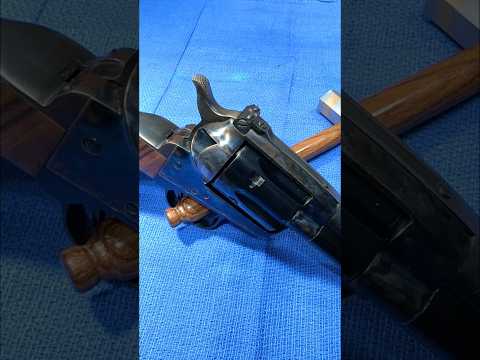
Colt Prototype Self-Ejecting Revolver

Published on August 16, 2018
Duration: 6:18

This Colt prototype by engineer Robert Roy explored a gas-operated self-ejecting revolver mechanism. While innovative, it faced practical limitations, only ejecting 5 of 6 rounds and requiring cylinder opening for reloading anyway. The design featured a unique gas tap and vent system, but remained a 'tool room' experiment with mismatched parts.

Quick Summary

The Colt prototype self-ejecting revolver used a gas-operated system, tapping gas from the barrel to blow spent casings out. However, it was impractical as it only ejected 5 of 6 rounds, and manual ejection is equally efficient when reloading a revolver.

Chapters

  1. 00:00Introduction: Colt Prototype Revolver
  2. 00:23Engineer Robert Roy's Background
  3. 01:21Gas-Operated Ejection Mechanism
  4. 02:36Ejection Gate and Deflector Design
  5. 03:12Prototype Construction and Materials
  6. 04:05Practicality and Conclusion

Frequently Asked Questions

Who designed the Colt prototype self-ejecting revolver?

The Colt prototype self-ejecting revolver was designed by Robert Roy, a long-time Colt engineer who worked for the company from 1963 to 1993. He was involved in significant projects like the SSP pistol and CMG machine guns.

How did the Colt prototype self-ejecting revolver work?

It used a gas-operated system, similar to an AR-15. Gas tapped from the barrel traveled through a tube and vented into the cylinder chamber, blowing the spent casing out the back.

Why did the self-ejecting revolver concept not become popular?

The concept was impractical because the gas system could only eject 5 out of 6 rounds (the last round lacked subsequent gas pressure). Since the cylinder must be opened to reload anyway, manual ejection proved just as efficient and less complex.

What were the construction details of the Colt prototype?

The prototype was a 'tool room' experiment made from mismatched parts, featuring a .357 Magnum barrel threaded into a new receiver. It lacked some final components and showed signs of being a rough testbed.

Related News

All News →

More Gunsmithing & DIY Videos You Might Like

More from Forgotten Weapons

View all →