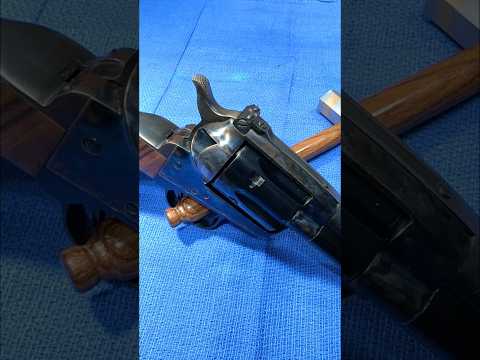
Colt Prototype Self-Ejecting Revolver

Published on August 16, 2018
Duration: 6:18

This entry details the unique gas-operated mechanism of the Colt Prototype Self-Ejecting Revolver, as explained by Ian McCollum. It highlights the experimental nature of the design, its reliance on gas pressure for ejection, and the practical limitations that prevented its widespread adoption. The insights provided are valuable for understanding historical firearm development and complex mechanical systems.


Quick Summary

The Colt Prototype Self-Ejecting Revolver features a unique gas-operated system, drawing parallels to the AR-15. Propellant gas tapped from the barrel is channeled to vent into the cylinder, ejecting spent casings. However, it couldn't eject the final round, and manual ejection proved more practical for revolvers.

Chapters

  1. 00:00Introduction: Colt Prototype Revolver
  2. 00:23Robert Roy's Background at Colt
  3. 01:21Mechanism of Action: Gas-Operated Ejection
  4. 02:36Ejection Gate and Deflector Explained
  5. 03:12Prototype Construction and Materials
  6. 04:05Practicality and Conclusion: Why It Failed

Frequently Asked Questions

How does the Colt Prototype Self-Ejecting Revolver work?

The Colt Prototype Self-Ejecting Revolver uses a gas-operated system. Propellant gas is tapped from the barrel, travels through a tube, and vents into the cylinder chamber to eject spent casings, similar in principle to an AR-15's gas impingement system.

What were the main limitations of the Colt Prototype Self-Ejecting Revolver?

The primary limitation was its inability to eject the final round in the cylinder, as it lacked the subsequent shot's gas pressure. This, combined with the need to open the cylinder for reloading, made manual ejection more practical and less complex.

Who was Robert Roy and what was his role at Colt?

Robert Roy was a long-time Colt engineer who joined in 1963 and retired in 1993 as Director of International Sales. He was involved in projects like the SSP pistol and the CMG light machine gun series.

What is the significance of the aluminum gate on the Colt Prototype Self-Ejecting Revolver?

The lightweight, spring-loaded aluminum gate on the frame acts as both a dust cover and a deflector, preventing high-velocity ejected casings from striking the shooter.

Related News

All News →

More Gunsmithing & DIY Videos You Might Like

More from Forgotten Weapons

View all →