"Grandpa Nambu" Japanese Pistol

Published on November 15, 2016
Duration: 19:40

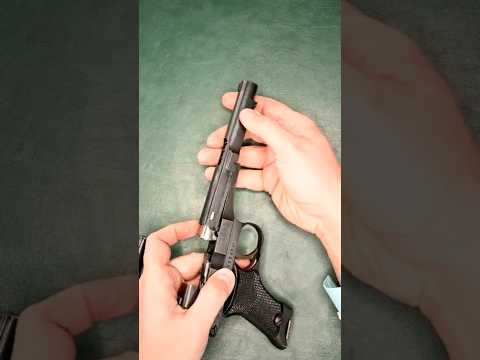
This guide details the field stripping process for the Nambu Type A 'Grandpa' pistol, as demonstrated by Ian McCollum. It covers the removal of the striker assembly and the separation of the slide and barrel from the frame. The guide emphasizes a critical safety warning regarding the fragility of the striker tab, advising against dry-firing.


Quick Summary

The Nambu Type A "Grandpa" pistol, Japan's first successful semi-automatic handgun, fires the 8mm Nambu cartridge. It features a unique tilting locking block mechanism and a grip safety. A critical weakness is its striker tab, prone to shearing, making dry-firing strongly discouraged. Field stripping involves removing the striker assembly and lowering the trigger guard.

Chapters

  1. 00:00Introduction and History
  2. 01:17Design and Caliber
  3. 02:51Nomenclature and Stock
  4. 04:13Production and Thai Service
  5. 08:07Controls and Features
  6. 09:41Disassembly Process
  7. 13:35Internal Mechanics and Weaknesses
  8. 17:02Magazine and Model Upgrades

Frequently Asked Questions

What makes the Nambu Type A "Grandpa" pistol historically significant?

The Nambu Type A "Grandpa" is significant as Japan's first successful semi-automatic handgun, developed by Kijiro Nambu starting in 1897 to modernize military sidearms and replace older revolvers.

What caliber does the Nambu Type A "Grandpa" pistol fire?

The Nambu Type A "Grandpa" pistol fires the 8mm Nambu cartridge. This bottlenecked round is comparable in power to a .380 Auto, with a 102-grain bullet traveling around 950-1000 fps.

How do you field strip the Nambu Type A "Grandpa" pistol?

Field stripping involves removing the striker spring, then depressing the barrel/slide assembly against a surface while pushing the magazine release to lower the trigger guard, allowing the internal assembly to be removed. A key step is rotating the rear cap to access the striker spring.

What is a major design weakness of the Nambu Type A "Grandpa"?

A significant weakness is the small tab on the striker, which is prone to shearing off. This makes dry-firing these pistols highly discouraged to prevent damage.

More Gunsmithing & DIY Videos You Might Like

More from Forgotten Weapons

View all →