History of WWI Primer 104: S&W 1917 Documentary

Published on July 30, 2019
Duration: 31:29

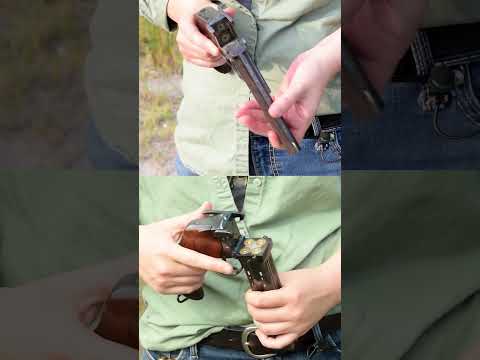
This guide details the proper loading and ejection technique for the Smith & Wesson Model 1917 Revolver using half-moon clips, as demonstrated by C&Rsenal. It emphasizes the efficiency gained by converting fine motor skills to gross motor skills for combat reloading. The video's expert analysis highlights the historical significance and mechanical ingenuity of this WWI-era sidearm.


Quick Summary

The Smith & Wesson Model 1917 Revolver, adopted by the US Army in WWI, weighs 2.25 lbs and fires .45 ACP. Its key innovation was the half-moon clip, which enabled faster reloading of rimless cartridges by allowing simultaneous loading and ejection, a crucial advantage in combat scenarios.

Chapters

  1. 00:00Introduction to the S&W 1917
  2. 00:42Technical Specifications
  3. 00:59Historical Context and US Entry into WWI
  4. 03:16The .45 ACP Challenge in Revolvers
  5. 04:50Invention of the Half-Moon Clip
  6. 06:33Adoption and Production Contracts
  7. 07:28Design Features and Early Variants
  8. 08:23Shooting Demonstration
  9. 09:24Labor Disputes and Nationalization
  10. 13:24Post-War Production and Service Life
  11. 18:16Comparison with Colt 1917

Frequently Asked Questions

What are the key technical specifications of the Smith & Wesson Model 1917 Revolver?

The S&W Model 1917 Revolver weighs approximately 2.25 lbs (1.0 kg), has an overall length of 10.8 inches (274mm), and a barrel length of 5.5 inches. It is chambered in .45 ACP and holds 6 rounds, typically fed via half-moon clips.

How did the half-moon clip solve the problem of loading rimless .45 ACP cartridges into revolvers?

The half-moon clip securely holds six rimless .45 ACP cartridges, allowing them to be loaded and ejected simultaneously from the revolver cylinder. This design significantly speeds up reloading and simplifies the process, converting fine motor skills into gross motor skills for combat use.

What historical context led to the adoption of the Smith & Wesson Model 1917?

During World War I, the US needed a large-caliber sidearm. Colt and S&W were already producing revolvers for the UK in .455 Webley. Upon US entry into the war, production shifted to domestic needs, leading to the adoption of the .45 ACP chambered S&W 1917 as an emergency weapon.

What were some notable design features or variants of the S&W 1917?

Early production S&W 1917 revolvers featured unique hammer ridges for oil retention, though these were later removed as they collected dirt. The barrel was also shorter than previous commercial models. Comparisons often highlight its ergonomics and cylinder latch placement.

More Gunsmithing & DIY Videos You Might Like

More from C&Rsenal

View all →