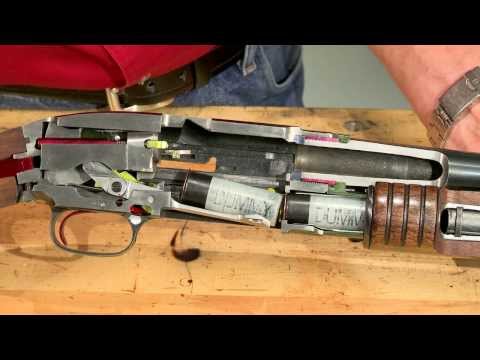
How to Install a Short Chambered Barrel Presented by Larry Potterfield | MidwayUSA Gunsmithing

Published on August 12, 2013
Duration: 4:19

This video demonstrates the modern process of fitting a short-chambered barrel to a Remington 700 action, highlighting the reduced lathe work required today. It details the essential gunsmithing tools, the importance of precise measurements for component fit, and the critical steps of barrel installation and finish chambering. Proper headspacing using GO and NO-GO gauges is emphasized for safety and functionality.

Quick Summary

Modern barrel fitting is simplified by pre-threaded, short-chambered barrels. Essential tools include an action wrench, barrel vise, finish reamer, and GO/NO-GO headspace gauges. Proper measurement and meticulous headspacing verification are critical for safe and accurate rifle function.

Chapters

  1. 00:00Introduction to Modern Barrel Fitting
  2. 00:53Required Gunsmithing Tools
  3. 01:20Measuring and Component Fit
  4. 02:06Barrel Installation Steps
  5. 03:02Finish Chambering and Headspacing

Frequently Asked Questions

What are the essential tools needed for installing a short-chambered rifle barrel?

You'll need an action wrench for securing the receiver, a barrel vise to hold the barrel, a finish reamer with a T-handle for cutting the chamber, and headspace gauges (both GO and NO-GO) to ensure proper clearance.

How does modern barrel fitting differ from older methods?

Modern barrel fitting is simplified because manufacturers provide pre-threaded, contoured, and short-chambered barrels. This significantly reduces the amount of precise lathe work previously required for custom barrel installation.

What is the purpose of the 'three rings of steel' in a Remington 700 action?

The 'three rings of steel' refer to the design where the cartridge fits the bolt face, the bolt fits into the barrel recess, and the receiver holds the barrel. This system ensures proper alignment and strength for safe operation.

How is proper headspace verified during barrel installation?

After finish chambering, a GO gauge is used; the bolt must close on it. Then, a NO-GO gauge is used; the bolt must NOT close on it. This confirms the headspace is within safe and functional limits.

Related News

All News →

More Gunsmithing & DIY Videos You Might Like

More from MidwayUSA

View all →