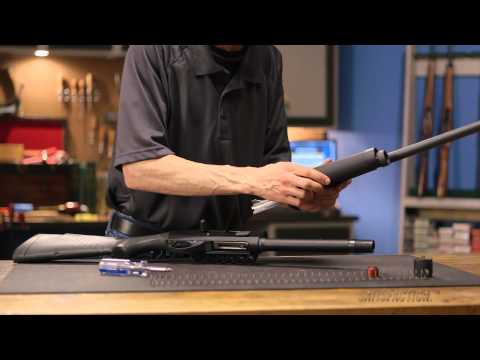
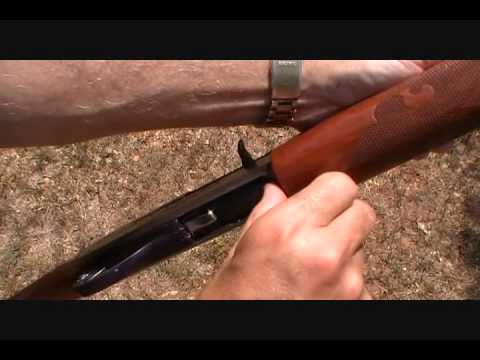
Is the S&W 1000 shotgun fixed? Or will it flop again?

Published on December 17, 2025
Duration: 6:15

This guide details the troubleshooting process for a Smith & Wesson Model 1000 shotgun experiencing cycling issues. It highlights the importance of correctly orienting the gas piston and inspecting the gas system components. The analysis suggests that a backwards-installed gas piston was the root cause of the cycling failures, emphasizing meticulous disassembly and reassembly for proper function.

Quick Summary

The Smith & Wesson Model 1000 shotgun's cycling failures were traced to a backwards-installed gas piston. This incorrect orientation restricted piston travel and misaligned gas ports. Flipping the piston to its proper position doubles travel and aligns ports, resolving the issue and restoring reliable semi-automatic function.

Chapters

  1. 00:00Introduction and Visual Overview
  2. 00:41Range Testing and Initial Failures
  3. 01:25Ammunition Testing
  4. 02:15Troubleshooting Dilemma
  5. 03:06Final Teardown Decision
  6. 04:25Root Cause Discovery: Piston Orientation

Frequently Asked Questions

What was the primary reason for the Smith & Wesson Model 1000 shotgun failing to cycle?

The primary reason for the cycling failures in the Smith & Wesson Model 1000 was a backwards-installed gas piston. This incorrect orientation restricted the piston's travel and misaligned the gas ports, preventing the semi-automatic action from functioning correctly.

How does the gas piston orientation affect the S&W Model 1000's cycling?

When installed correctly, the gas piston allows for sufficient travel to operate the bolt and chamber new rounds. If installed backwards, its travel is significantly reduced, and gas ports become misaligned, hindering the gas-operated system's ability to cycle reliably.

What types of ammunition were tested on the S&W Model 1000, and what were the results?

The S&W Model 1000 was tested with standard 1250 FPS reloads, which failed to cycle. Subsequently, 'hot and heavy' loads (1300-1350 FPS) were used. While these occasionally ejected shells, they still failed to chamber the next round, indicating a mechanical issue beyond just weak ammunition.

What other potential issues could cause cycling problems in a Smith & Wesson Model 1000?

Besides incorrect piston orientation, other potential causes for cycling issues in the S&W Model 1000 include a deformed magazine tube or a gas piston that has been improperly modified, such as being sanded down by a previous owner.

More Gunsmithing & DIY Videos You Might Like

More from Cranky Gun Reviews

View all →