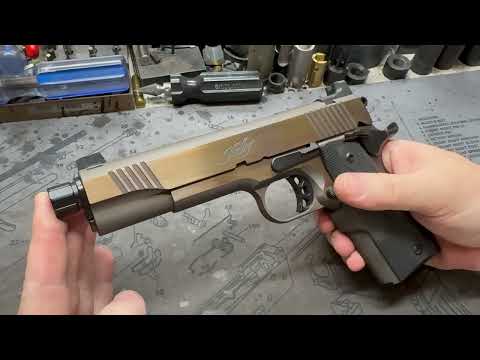
"Kimber 1911 Troubles" by Nutnfancy

Published on October 10, 2010
Duration: 8:27

This video details the troubleshooting process for a Kimber 1911 pistol experiencing frequent stovepipe malfunctions. The presenters systematically test various magazines and ammunition, concluding the issue likely stems from a worn recoil spring or extractor. Professional gunsmithing is recommended for diagnosis and repair.

Quick Summary

Stovepipe jams in a Kimber 1911 can stem from worn recoil springs or faulty extractors. Systematic testing with various magazines and ammunition is crucial. If issues persist, professional gunsmithing is recommended for diagnosis and repair.

Chapters

  1. 00:00Introduction with Officer Jared
  2. 01:06Troubleshooting Plan for Kimber 1911
  3. 02:19Magazine Selection for Testing
  4. 03:07Live Fire Testing & Malfunctions
  5. 04:46Considering Glock Alternatives
  6. 05:41Diagnosis: Spring or Extractor Issue
  7. 07:10Recommendation for Professional Repair

Frequently Asked Questions

What are common causes of stovepipe jams in a Kimber 1911?

Stovepipe jams in a Kimber 1911 can be caused by a variety of issues, including a worn-out recoil spring, a faulty extractor, or problems with the magazines. Testing different magazines and ammunition is a good first step.

How did they troubleshoot the Kimber 1911's reliability issues?

They systematically tested the Kimber 1911 with multiple brands of magazines (Chip McCormick, Mec-Gar, Wilson Combat) loaded with different factory ammunition. The consistent malfunctions across all tested magazines pointed towards an issue with the firearm itself.

What are the recommended next steps for a malfunctioning Kimber 1911?

If troubleshooting with different magazines and ammunition doesn't resolve the issue, it's recommended to inspect the recoil spring and extractor. For persistent problems, professional gunsmithing at a reputable shop like Impact Guns is advised.

Why might a SWAT officer prefer a Glock over a 1911 for duty?

While both are capable firearms, a SWAT officer might prefer a Glock (like the Glock 34 or 35) for duty due to its reputation for extreme reliability and simpler maintenance, which are critical factors in high-stress operational environments.

Related News

All News →

More Gunsmithing & DIY Videos You Might Like

More from nutnfancy

View all →