Loved or Hated? The M1 Carbine

Published on April 26, 2025
Duration: 19:10

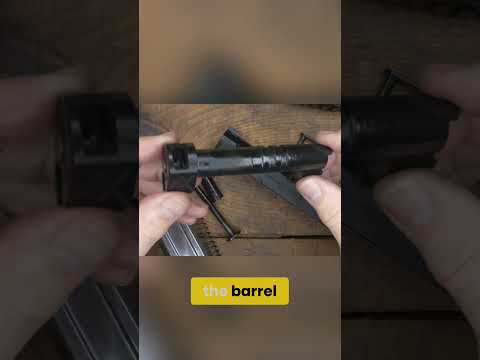
This guide details the field stripping process for the M1 Carbine, a crucial maintenance task for owners. It covers safety checks, removal of key components like the operating rod, bolt, and spring assembly, and reassembly. The video emphasizes the importance of understanding the carbine's controls and maintenance for its continued functionality.

Quick Summary

The M1 Carbine, firing the .30 Carbine round, was developed rapidly by Winchester and mass-produced by multiple companies, exceeding 6 million units. It served as a Personal Defense Weapon (PDW) for support troops, valued for its light weight and ease of use, though its stopping power was debated compared to larger rifles.

Chapters

  1. 00:00Introduction and Skit
  2. 01:17Overview of the M1 Carbine
  3. 02:09Design and Development
  4. 03:12The 'Carbine Williams' Myth
  5. 05:15Production and Manufacturers
  6. 06:12Technical Features and Iterations
  7. 08:54Performance Comparison
  8. 10:11The PDW Concept
  9. 12:30Veteran Perspectives
  10. 15:15Controls and Disassembly
  11. 17:15Post-War Service and Legacy

Frequently Asked Questions

What was the M1 Carbine's primary role during World War II?

The M1 Carbine was primarily designed as a Personal Defense Weapon (PDW) for support personnel, officers, and paratroopers who needed a lighter, more compact firearm than standard infantry rifles like the M1 Garand.

Who manufactured the M1 Carbine, and how many were produced?

Over 6 million M1 Carbines were produced by numerous manufacturers, including Inland Manufacturing, Winchester, General Motors, and IBM, making it one of the most mass-produced firearms in history.

What caliber does the M1 Carbine fire?

The M1 Carbine fires the .30 Carbine (7.62x33mm) cartridge. This round was specifically developed for the carbine, offering less recoil than traditional rifle cartridges but more power than most pistol rounds.

Why is the M1 Carbine considered 'loved or hated'?

It's 'loved' for its lightweight, ease of use, and reliability in its intended role, and 'hated' by some for its perceived lack of stopping power compared to larger caliber rifles, particularly in later conflicts like Vietnam.

Related News

All News →

More Gunsmithing & DIY Videos You Might Like

More from Administrative Results

View all →