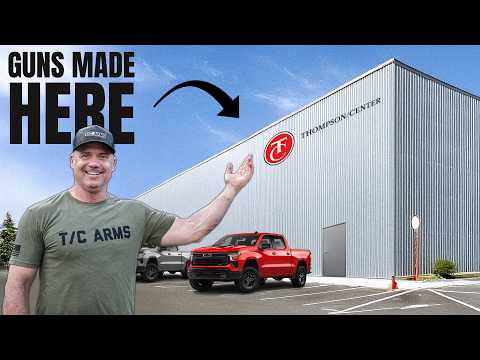
Making a Muzzleloader

Published on August 15, 2024
Duration: 11:51

This video provides an in-depth look at the investment casting process used by Thompson/Center Arms to manufacture firearm components, specifically for their Encore muzzleloader. Expert instruction from Tyler Stone details each stage, from wax pattern creation and ceramic shell building to metal pouring and rigorous quality control. The process emphasizes precision, material integrity, and the vertically integrated approach taken by Thompson/Center.

Quick Summary

Thompson/Center Arms utilizes investment casting to manufacture its Encore muzzleloader parts. This process involves creating precise wax patterns, building multiple ceramic shell layers, removing wax with superheated steam, and pouring molten metal at high temperatures. Rigorous quality control ensures the final components meet exact specifications.

Chapters

  1. 00:00Introduction to Thompson/Center Encore Manufacturing
  2. 00:16Wax Pattern Creation for Precision Parts
  3. 01:30Advantages of Investment Casting Explained
  4. 02:14Assembling Wax Trees for Coating
  5. 02:57Ceramic Coating Process for Detail
  6. 04:09Building Ceramic Shell Strength
  7. 04:45Wax Removal via Autoclave
  8. 05:43Metal Melting and Pouring Techniques
  9. 06:31Critical Pouring Speed in Casting
  10. 07:42Precision and Coordination in Casting
  11. 08:05Shell Destruction and Part Cleaning
  12. 09:12Quality Control and Inspection Procedures
  13. 10:03Thompson/Center's Vertically Integrated Process
  14. 11:20New Assembly Room in Rochester, NH

Frequently Asked Questions

What is the primary manufacturing method shown for Thompson/Center Encore muzzleloader parts?

The video demonstrates the investment casting process, a method where molten wax is used to create a pattern, which is then coated in ceramic, fired, and filled with molten metal to produce precise firearm components.

How does investment casting benefit firearm component manufacturing?

Investment casting creates parts close to their final 'net shape,' significantly reducing the need for extensive machining, minimizing material waste, and accurately replicating intricate features.

What are the critical temperature ranges involved in Thompson/Center's casting process?

Ceramic shells are pre-heated to 1800 degrees Fahrenheit, while the molten metal is poured at approximately 2800 degrees Fahrenheit. Wax patterns are initially formed at around 130 degrees Fahrenheit.

What role does quality control play in the manufacturing of these parts?

Extensive quality control is performed, including dimensional and aesthetic inspections, void checks, and the use of Coordinate Measurement Machines (CMM) and hardness testers to ensure parts meet precise specifications.

Related News

All News →

More Gunsmithing & DIY Videos You Might Like

More from Thompson/Center Arms

View all →