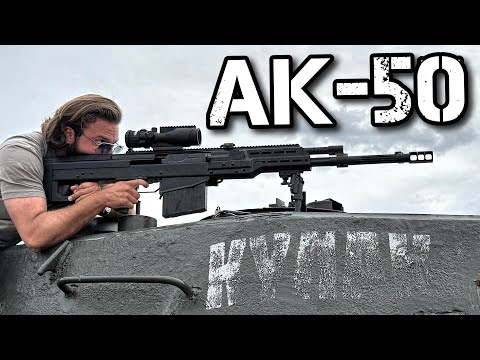
My First Time Shooting The Raptor 50 BMG #gun #tactical #civtac

Published on September 8, 2023
Duration: 0:59

This guide details the initial firing process for a custom-built Raptor 50 .50 BMG upper receiver mounted on an AR-15 lower. It emphasizes safety through remote firing for the first shot due to the powerful caliber and custom nature of the build. The process involves careful assembly, remote ignition, and preparation for significant recoil, as demonstrated by the Civilian Tactical host.

Quick Summary

The Raptor 50 is a .50 BMG upper receiver by Big Kahuna Firearms that attaches to a standard AR-15 lower. For the first shot of such a custom build, remote firing is a crucial safety protocol due to the caliber's power and potential for unexpected behavior, allowing the shooter to observe from a safe distance.

Chapters

  1. 00:00Introduction & Custom Build
  2. 00:07Raptor 50 BMG Overview
  3. 00:18Loading and Remote Safety Test
  4. 00:27SDI Sponsor Mention
  5. 00:36Remote Firing & Recoil Impact
  6. 00:50Shoulder Firing Experience

Frequently Asked Questions

What is the Raptor 50 BMG rifle?

The Raptor 50 is a .50 BMG upper receiver, manufactured by Big Kahuna Firearms, designed to attach to a standard AR-15 lower receiver, creating a custom .50 caliber rifle build.

Why is remote firing recommended for the first shot of a custom .50 BMG build?

Remote firing is a critical safety measure for custom builds, especially in powerful calibers like .50 BMG, to mitigate risks from potential malfunctions or extreme recoil, allowing the shooter to remain at a safe distance.

What kind of recoil can be expected from a .50 BMG rifle?

The recoil from a .50 BMG rifle is exceptionally significant, comparable to firing a cannon. It's powerful enough to move the firearm considerably even when it's securely mounted on a bench.

Where can one learn more about gunsmithing for custom firearm builds?

The Sonoran Desert Institute (SDI) offers gunsmithing education, providing resources for individuals interested in learning the skills needed for firearm assembly, modification, and repair.

More Gunsmithing & DIY Videos You Might Like

More from Civilian Tactical

View all →