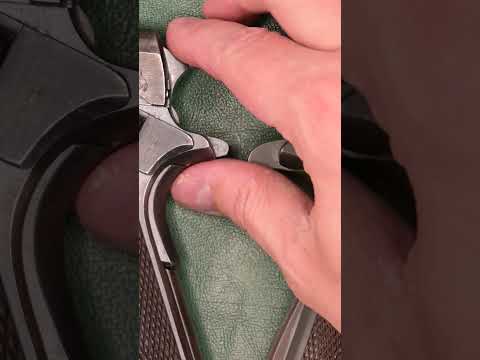
One of the roughest weapons of WitW yet. The IRA Colt M1911A1 with firearms expert Jonathan Ferguson

Published on August 16, 2023
Duration: 19:03

This guide details the modifications made to a Remington Rand M1911A1 for full-automatic fire, as presented by firearms expert Jonathan Ferguson. It covers the addition of a foregrip, buttstock, extended magazine, external extractor, and internal sear mechanism. These 'shed-style' modifications were characteristic of Provisional IRA arms development in the 1970s.

Quick Summary

Firearms expert Jonathan Ferguson analyzes a heavily modified Provisional IRA M1911A1, highlighting its 'shed-style' full-auto conversion. Key modifications include a brazed wooden foregrip, steel buttstock, a crude 14-round extended magazine, and a large external extractor to manage the high rate of fire (est. 900 RPM).

Chapters

  1. 00:00Introduction to Modified M1911A1
  2. 01:20Historical Context: IRA Use
  3. 02:09Full-Auto Control Modifications
  4. 04:29Extended Magazine Construction
  5. 06:45Extraction and Chamber Modifications
  6. 08:12Internal Full-Auto Mechanism
  7. 13:20Comparison to Gangster-Era Conversions

Frequently Asked Questions

What modifications were made to the IRA's Colt M1911A1 for full-automatic fire?

The IRA M1911A1 featured a brazed wooden foregrip, a steel wire buttstock, a doubled-capacity 14-round magazine made from two welded units, and a large external extractor for reliability during automatic fire. Internal modifications included a sear extension for continuous firing.

What is a 'shed-style' firearm modification?

'Shed-style' refers to the informal, often crude, modification or manufacturing of firearms in non-industrial settings like garages or workshops. This IRA M1911A1 conversion exemplifies 'shed-style' work, using improvised methods and materials for full-automatic capability.

How did the IRA M1911A1 manage its high rate of fire?

To manage the estimated 900 RPM rate of fire, the pistol was fitted with a substantial handmade wooden foregrip brazed to the frame and a crude, extended 14-round magazine. These aimed to provide better handling and sustained fire.

What is the significance of the external extractor on the modified M1911A1?

The large, handmade external extractor was added to improve feeding and extraction reliability during the rapid cycling of full-automatic fire. The chamber was also modified to accommodate this oversized extractor's function.

Related News

All News →

More Gunsmithing & DIY Videos You Might Like

More from Royal Armouries

View all →