Razor Edge Knives

Published on May 22, 2011
Duration: 11:28

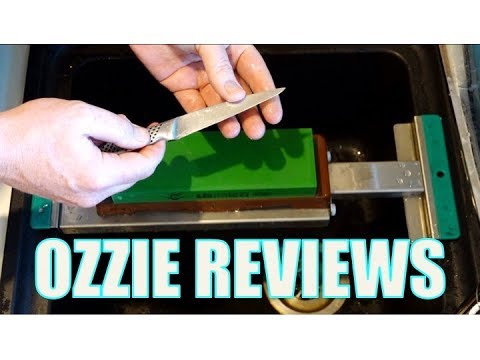
This video demonstrates a professional knife sharpening service, Razor Edge Knives, highlighting their techniques using paper wheels, polishing rouge, and an Edge Pro system. The instructor emphasizes maintaining consistent angles, managing heat buildup, and achieving a razor-sharp edge on various knife types, including serrated blades. The process involves establishing a burr, refining the edge with polishing compounds, and finishing on strops for optimal sharpness.


Quick Summary

Professional knife sharpening involves establishing a burr on both sides of the blade using grit wheels, then refining the edge with polishing rouge on a separate wheel. Maintaining a consistent angle, typically 21 degrees per side for general cutting, is crucial. Heat buildup is managed with wax, and finishing often includes fine stones and stropping for optimal sharpness.

Chapters

  1. 00:00Introduction to Knife Sharpness
  2. 00:15Personal Sharpening Struggles
  3. 00:42Discovering Razor Edge Knives
  4. 01:15Razor Edge Knives Service
  5. 01:33Knife Types and Angles
  6. 02:02Sharpening Wheels and Rouge
  7. 02:32Working Up a Burr
  8. 03:43Removing the Burr and Polishing
  9. 04:07Importance of Consistent Angle
  10. 04:38USMC Kar Knife Sharpening
  11. 05:02Glock Field Knife and CRKT
  12. 05:11Sharpening Serrations
  13. 06:24Columbia River M16 with Serrations
  14. 06:38Edge Pro Sharpening System
  15. 07:09Using Water Stones
  16. 07:42Coarse Stone and Burr Formation
  17. 07:58Changing Stones and Polishing
  18. 08:37Perfect Angle and Tools
  19. 08:53Busy Boss Jack Combat Grade
  20. 09:07Testing Knife Sharpness
  21. 09:28Steeling a Knife
  22. 10:06Sharpening Straight Razors
  23. 10:25Stropping and Finishing
  24. 10:57Call to Action and Outro

Frequently Asked Questions

What is the recommended angle for general knife cutting tasks?

For general cutting tasks, a 21-degree angle per side is recommended. This angle is considered optimal for maximizing the edge's life and its overall cutting ability, providing a good balance between sharpness and durability.

How can you tell if a knife edge needs to be 'stealed' or realigned?

To test if a knife edge needs steeling, place the edge on your fingernail. If it catches and holds, the edge is good. If it starts to roll off or slide, it indicates the edge is misaligned and needs to be realigned with a steeling rod.

What is the purpose of using wax during knife sharpening?

Wax is applied to sharpening wheels to prevent excessive heat buildup on the knife blade. Minimizing heat is crucial because high temperatures can damage the knife's temper, compromising its hardness and ability to hold an edge.

What are the key stages in professional knife sharpening using paper wheels?

Professional sharpening typically involves using a grit wheel to establish a burr on both sides, then switching to a polishing wheel with rouge to remove the burr and refine the edge. This is often followed by finer stones and stropping for a superior finish.

More Gunsmithing & DIY Videos You Might Like

More from sootch00

View all →