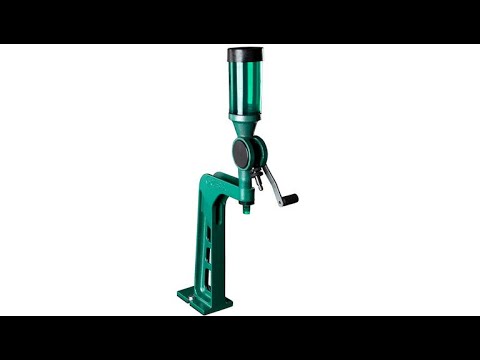
Reloading Powder Scales & Measures ~ Put your money away!

Published on September 27, 2019
Duration: 35:53

This guide details expert reloading techniques for powder measurement and scale calibration, emphasizing the longevity and precision of traditional tools like the RCBS Uniflow and Lyman/Ohaus 505 scale. It covers component selection, consistent operation, averaging vs. trickling methods, and the minimal ballistic impact of minor charge variations, as demonstrated by an experienced firearms instructor.

Quick Summary

Expert reloaders often prefer traditional balance beam scales like the Lyman/Ohaus 505 for their perfect zero repeatability via gravity and magnetic damping. For the RCBS Uniflow powder measure, using the 'small capacity' drum maximizes accuracy. Even a 0.1-grain charge error has minimal ballistic impact, suggesting a focus on consistent technique over obsessive grain counting.

Chapters

  1. 00:00Introduction and Equipment Longevity
  2. 03:15Balance Beam vs. Digital Scales
  3. 06:28Anatomy of a Powder Measure
  4. 10:34Drum Selection for Accuracy
  5. 12:30Maintenance and Lubrication
  6. 15:41Consistent Operation Technique
  7. 17:27Scale Setup and Calibration
  8. 21:16Charging Methods: Averaging vs. Trickling
  9. 23:39Speed and Efficiency Comparison
  10. 27:22Ballistic Impact of Charge Errors

Frequently Asked Questions

Why are traditional balance beam powder scales considered superior by some reloaders?

Traditional balance beam scales, like the Lyman/Ohaus 505, are favored for their reliance on gravity and magnetic damping, ensuring perfect repeatability to zero. This contrasts with digital scales that may have a +/- 0.1 grain sensitivity, potentially leading to greater overall charge variation.

What is the recommended drum size for an RCBS Uniflow powder measure for maximum accuracy?

For maximum accuracy, the 'small capacity' drum is strongly recommended for the RCBS Uniflow powder measure. This drum has a smaller wiping area, leading to finer precision and is suitable for charges up to 65-67 grains, covering most standard rifle cartridges.

How much does a small powder charge error affect bullet trajectory?

A 0.1-grain error in powder charge, for example with Varget in a 6.5 Creedmoor, results in only a minor velocity change (around 6 fps) and a negligible deviation (about 0.1 inch at 400 yards), indicating that extreme precision beyond this may not significantly impact practical accuracy for most shooters.

What is the 'trickling up' method in reloading?

The 'trickling up' method involves dropping a slightly lighter powder charge than desired using the powder measure, then using a powder trickler to add individual grains until the exact target weight is achieved on the scale. This is crucial for bulky powders or when maximum precision is required.

More Gunsmithing & DIY Videos You Might Like

More from GunBlue490

View all →