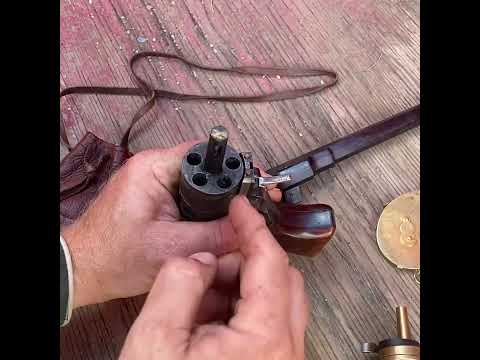
Remington Revolving Carbine

Published on November 27, 2024
Duration: 14:53

This guide details the process of converting a Remington New Model percussion revolver to fire cartridges, a common practice in the late 19th century. It covers the steps for removing the percussion cylinder and installing a conversion cylinder, as well as the procedure for reloading after firing. The video emphasizes that while these conversions were popular, they were often performed by gunsmiths rather than being a simple factory option until later.

Quick Summary

The Remington Revolving Carbine, often based on the New Model revolver, was initially a percussion firearm in .36 and .44 caliber. By 1872, factory cartridge conversions became available, typically for .38 and .46 Rimfire, though custom .45 Colt conversions were also made. Safe firing requires a specific grip to avoid gas leakage from the cylinder gap.

Chapters

  1. 00:25Introduction to the Remington Revolving Carbine
  2. 00:39Historical Context: Post-Civil War
  3. 01:35From Surplus Parts to Carbine
  4. 01:44Percussion vs. Cartridge Era
  5. 02:03Calibers: .36 and .44
  6. 02:30Cartridge Conversions (1871-1872)
  7. 03:08Close Look: Revolver vs. Carbine
  8. 03:53Swapping Cylinders: Myth vs. Reality
  9. 04:57How to Convert to Cartridge Firing
  10. 06:05Loading and Firing with Conversion Cylinder
  11. 07:01Why Revolving Carbines Were Problematic
  12. 08:00Demonstrating Gas Leakage
  13. 08:38Chamber Count Differences (.38 vs .46)
  14. 09:32Shooting at 50 Yards
  15. 11:09Cylinder Pin Fouling Issues
  16. 12:16Overall Assessment of the Revolving Carbine
  17. 13:49Channel Support and Future Content

Frequently Asked Questions

What were the primary calibers for the Remington New Model revolving carbine?

The Remington New Model revolving carbine was initially produced in .36 and .44 caliber percussion. After the patent expiration, factory cartridge conversions typically accepted .38 caliber and .46 caliber Rimfire ammunition, though custom .45 Colt conversions were also common.

How was the Remington revolving carbine converted to fire cartridges?

Conversions involved replacing the original percussion cylinder with a specialized cartridge conversion cylinder. This process typically required placing the firearm on half-cock, removing the cylinder pin, swapping cylinders, and then re-securing the pin and ramrod assembly.

What were the main safety concerns with firing a Remington revolving carbine?

Key safety concerns included gas leakage and spalling from the cylinder gap, which could injure the shooter's hand if held improperly. For percussion models, the risk of 'chain fire' (igniting multiple chambers) was also a significant danger.

Why was carrying extra loaded percussion cylinders historically uncommon?

Loaded percussion cylinders were considered hazardous due to their sensitivity to impact and dropping. Accidental ignition could occur, making them dangerous to carry loose, akin to small explosive devices.

More Gunsmithing & DIY Videos You Might Like

More from InRangeTV

View all →