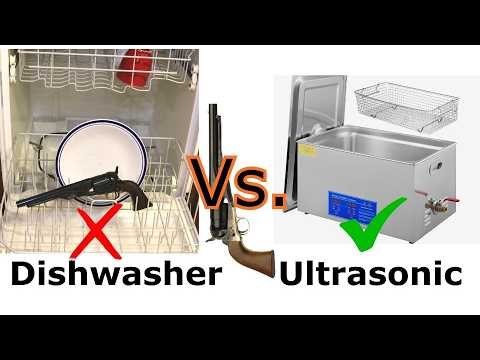
Ultrasonic Cleaner Performance Testing (Lyman TurboSonic 6000)

Published on April 15, 2018
Duration: 15:03

This guide details the process of cleaning a heavily carboned Griffin Optimus modular silencer using the Lyman TurboSonic 6000 ultrasonic cleaner. It emphasizes the critical safety warning against cleaning aluminum components and outlines the steps for disassembly, cleaning cycles with specialized solution and distilled water, and reassembly. The video highlights that perfect cleanliness is not always necessary for silencer performance.

Quick Summary

Never place aluminum components in an ultrasonic cleaner, as the ultrasonic waves can cause micro-channeling, weakening the material and potentially leading to dangerous failures. For optimal cleaning of firearm parts like silencers, use distilled water and a specialized ultrasonic cleaning solution in the Lyman TurboSonic 6000, setting the temperature to 140°F and running multiple cycles if necessary.

Chapters

  1. 00:00Introduction and Project Setup
  2. 00:51Introducing the Lyman TurboSonic 6000
  3. 01:36Ultrasonic Cleaner Safety: Aluminum Warning
  4. 02:39Lyman TurboSonic 6000 Control Panel Overview
  5. 03:48Inside the Ultrasonic Cleaner: Basket Function
  6. 05:01Cleaning Solution and Distilled Water
  7. 07:48First Cleaning Cycle Results (15 Minutes)
  8. 08:36Second Cleaning Cycle and Baffle Cleaning
  9. 10:14Final Component Assessment
  10. 10:47Ultrasonic Cleaner Discharge Valve
  11. 11:06Cleaning Obsidian 45 Housing Components
  12. 12:06Reassembling Silencer for Pistol Use
  13. 12:34Blacklist Industries Glock 19 Upgrade Kit
  14. 13:24Post-Cleaning Results and Summary
  15. 14:11Kitchen Cleaning Safety Discussion
  16. 14:34Temperature Check and Video Conclusion

Frequently Asked Questions

What is the primary safety concern when using an ultrasonic cleaner for firearm components?

The primary safety concern is never placing aluminum components into an ultrasonic cleaner. The ultrasonic waves can cause micro-channeling, weakening the aluminum and potentially leading to dangerous failures when the component is put back into use on a firearm.

What type of water should be used in an ultrasonic cleaner for firearm parts?

It is recommended to use distilled water. Tap water contains impurities that can promote rust on firearm components, whereas distilled water is free of these contaminants, ensuring a cleaner and safer process for your parts.

Does a silencer need to be perfectly clean to perform well?

No, silencer components do not need to be perfectly clean. In fact, a slightly dirty silencer with carbon buildup can sometimes perform better because the increased surface area can create more turbulence inside, enhancing its sound-dampening capabilities.

What are the key features of the Lyman TurboSonic 6000 ultrasonic cleaner?

The Lyman TurboSonic 6000 features 'Normal' and 'Degas' cleaning modes, adjustable timers up to 30 minutes in five-minute increments, and a maximum temperature setting of 140 degrees Fahrenheit. It also includes a basket to keep components elevated.

More Gunsmithing & DIY Videos You Might Like

More from The VSO Gun Channel

View all →