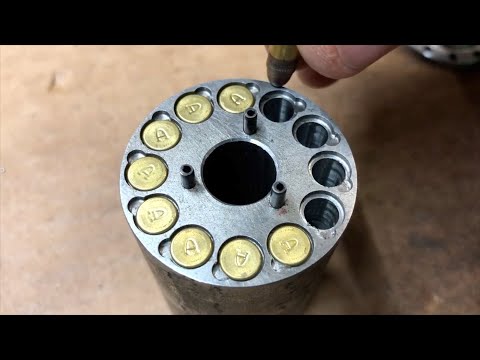
Welding Stuff: The journey continues!

Published on March 16, 2021
Duration: 12:45

This video details the post-welding and machining processes for firearm bolts, including heat treatment, sandblasting, Rockwell hardness testing to verify specified hardness, and manganese phosphate parkerizing for a durable black finish. It also covers the final assembly steps of installing extractors, ejectors, and firing pins, highlighting the importance of quality control throughout the manufacturing process.

Quick Summary

Firearm bolt manufacturing involves several critical steps after initial welding and machining. These include heat treatment for hardness, sandblasting for cleaning, Rockwell hardness testing for quality control, and manganese phosphate parkerizing for a durable black finish. Final assembly integrates extractors, ejectors, and firing pins.

Chapters

  1. 00:02Introduction and Bolt Head Welding Recap
  2. 00:31CNC Machining of Bolts
  3. 00:40Heat Treatment Process
  4. 00:48Sandblasting and Inspection
  5. 01:46Rockwell Hardness Testing Explained
  6. 02:14Parkerizing Process: Manganese Phosphate
  7. 03:16Post-Parkerizing Rinse and Drying
  8. 03:51Bolt Assembly: Extractor, Ejector, Firing Pin
  9. 04:03Finished Bolt Appearance and Discussion
  10. 06:16Manufacturing Challenges: Machined Slot Issues
  11. 06:50Product Placement: Flashlight Collaboration
  12. 09:25Flashlight Comparison
  13. 10:51Reflections on Product Placement and Creativity
  14. 11:26Conclusion and Future Content Preview

Frequently Asked Questions

What are the key steps in manufacturing firearm bolts after welding and machining?

After welding and CNC machining, firearm bolts undergo heat treatment for hardness. They are then sandblasted for cleaning, followed by a Rockwell hardness test to verify specifications. Finally, they are parkerized for a durable black finish and assembled with extractors, ejectors, and firing pins.

What is the purpose of the Rockwell hardness test in bolt manufacturing?

The Rockwell hardness test is a crucial quality control measure to confirm that the bolt meets the specified hardness requirements. This ensures the bolt can withstand the significant forces it will encounter during firearm operation, preventing premature wear or failure.

What is manganese phosphate parkerizing and why is it used on firearm bolts?

Manganese phosphate parkerizing is an old, durable black finishing process applied to firearm parts, commonly used on military rifles. It involves a bath of phosphoric acid and manganese at around 200°F, providing excellent corrosion resistance and a robust surface.

What are common manufacturing issues encountered when producing firearm bolts?

A common issue can arise from outsourced components, such as bolt heads, where machined slots for extractors might pass initial QC but be too tight or improperly dimensioned, preventing proper assembly and function. This underscores the need for rigorous inspection.

More from markserbu

View all →