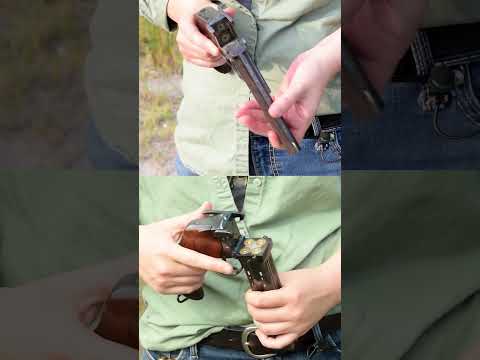
History of WWI Primer 107: US Winchester 1897 "Trench Gun" Documentary

Published on September 24, 2019
Duration: 92:50

This video provides an in-depth historical analysis of the Winchester Model 1897 shotgun, focusing on its development, military adoption, and evolution into the 'Trench Gun' variant used in World War I. It details the shotgun's mechanical features, historical context of its use, and the specific modifications made for combat, including the addition of a bayonet lug and heat shield. The presenter highlights the gun's significance as a precursor to modern pump-action shotguns and its impact on trench warfare.

Quick Summary

The Winchester Model 1897 'Trench Gun' was a pump-action shotgun adapted for WWI trench warfare, featuring a bayonet lug and ventilated handguard. Its cylinder bore and rapid firing capability made it effective at close range, though issues with ammunition and range limitations were noted.

Chapters

  1. 00:00:00Introduction: US Entry into WWI & Arms Rush
  2. 00:34:00Introducing the Winchester Model 1897 Riot Gun
  3. 01:22:00Historical Context: Martial Use of Shotguns
  4. 04:05:00The Slide-Action Revolution: Spencer & Roper Designs
  5. 09:54:00The Riot Gun: Purpose and Design
  6. 10:19:00John Browning & The Winchester Model 1893/1897
  7. 13:39:00Evolution to the Model 1897
  8. 16:32:00Detailed Look at a Commercial 1897
  9. 22:31:00Internal Mechanics of the 1897
  10. 25:56:00Commercial Success of the 1897
  11. 26:26:00US Army in the Philippines: Moro Conflict
  12. 30:18:00The 1897 Riot Gun in the Philippines
  13. 31:29:00WWI Declaration and US Equipment Shortages
  14. 32:46:001897 Riot Gun's Role in WWI Training
  15. 33:49:00The Concept of the Trench Gun Emerges
  16. 35:17:00Developing the Bayonet Mount for the Trench Gun
  17. 37:02:00The 'Type W' Trench Gun Configuration
  18. 42:21:00Shooting the Winchester 1897 Trench Gun
  19. 44:21:00Press Hype and Public Perception of the Trench Gun
  20. 45:48:00WWI Trench Gun Deployment and Field Testing
  21. 47:48:00Troop Feedback: Pros and Cons of the Trench Gun
  22. 49:24:00Notable Actions and Limitations of the Trench Gun
  23. 50:24:00German Protest Against US Shotgun Use
  24. 52:36:00The Term 'Trench Gun' vs. 'Riot Gun'
  25. 52:59:00WWI Procurement Numbers for 1897 Riot Guns
  26. 55:34:00Why Not the Model 12 Trench Gun?
  27. 56:52:00Ergonomics and Handling of the 1897 Riot Gun
  28. 61:11:00Safety Features and Controls of the 1897
  29. 65:36:00Ergonomics: Slide Action vs. Bolt Action
  30. 67:01:00Shooting Experience: Recoil and Sights
  31. 68:16:00The Ventilated Steel Handguard/Heat Shield
  32. 69:56:00Conclusion: Legacy of the Winchester 1897

Frequently Asked Questions

What made the Winchester Model 1897 suitable for trench warfare?

The Winchester Model 1897, particularly the 'Trench Gun' variant, was adapted with a bayonet lug and ventilated handguard for close-quarters combat. Its pump-action allowed for rapid firing of buckshot, effective in the confined spaces of WWI trenches.

What are the key features of the Winchester 1897 'Trench Gun'?

The 'Trench Gun' variant of the Winchester 1897 typically features a 20-inch cylinder bore barrel, a bayonet lug for attaching a bayonet, and a ventilated steel handguard to protect the shooter's hands.

Why was the Winchester 1897 called a 'Trench Gun'?

The term 'Trench Gun' became associated with the Winchester 1897 due to its adoption and modification for use in WWI trenches. While officially designated as a riot gun with bayonet attachment, the press and soldiers popularized the 'Trench Gun' moniker.

What were the main challenges faced by the Winchester 1897 in combat?

The primary challenges included the limited range of buckshot, the susceptibility of early paper shells to damage in wet conditions, and the difficulty of carrying sufficient ammunition. These issues sometimes reduced its effectiveness in prolonged engagements or adverse weather.

More Historical Firearms Analysis Videos You Might Like

More from C&Rsenal

View all →