Dangerous Liberty Ep38 - Special Guest Erik Cortina - World Champion Long Range Shooter

Published on July 27, 2023
Duration: 122:28

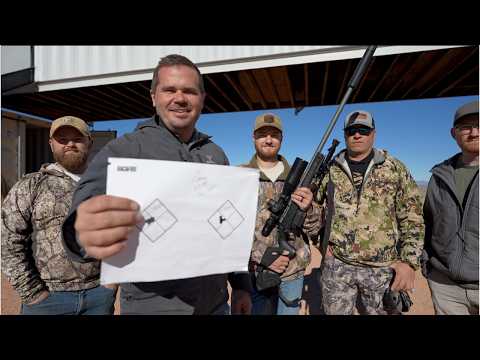
World Champion F-Class shooter Erik Cortina discusses the meticulous process of achieving extreme precision in long-range shooting. Key topics include the importance of barrel tuning, consistent brass and bullet preparation, and the mental game in competition. Cortina emphasizes testing and understanding variables to optimize performance, highlighting that consistency is paramount for success at the highest levels of the sport.

Quick Summary

Barrel tuning uses an adjustable weight on a rifle barrel to manage harmonics, aligning vibrations with ammunition for optimal accuracy. For F-Class, sub-MOA precision is critical, with rifles ideally shooting better than half-MOA at 100 yards. Consistency in brass and bullets is paramount, and the mental game plays a huge role in pushing performance limits.

Chapters

  1. 00:00Introduction & Guest Welcome
  2. 07:22Understanding Barrel Tuning
  3. 08:04Tuning Loads vs. Tuning the Rifle
  4. 10:39Benefits of Tuners in Variable Conditions
  5. 11:03Accuracy Requirements in Competition
  6. 12:49Precision vs. Accuracy: Defining Goals
  7. 13:57Half-MOA at 100 Yards as a Benchmark
  8. 14:16Typical Group Sizes at 1000 Yards
  9. 17:13The Three 'B's: Brass, Barrels, Bullets
  10. 18:15Brass Consistency: Lapua's Role
  11. 19:29Bullet Sorting: Testing and Elimination
  12. 23:52Bullet Pointing and BC Consistency
  13. 25:23The Case Against Cleaning Brass
  14. 28:08Time Investment in Load Development
  15. 29:42Preferred Bullets: Berger Hybrids
  16. 30:31Barrel Life in F-Class
  17. 32:21F-Class Rifle Chambering: 7 PRC
  18. 32:46F-Class Rifle Weight Limits
  19. 34:44Rock Chuck Olympics: 6 ARC at 1290 Yards
  20. 36:15All-In-One Shoot Structure
  21. 40:00MOA vs. Mil: The Great Debate
  22. 43:09Choosing the Right Scope System (Mil vs. MOA)
  23. 46:04Practical Differences: Mil vs. MOA in Stages
  24. 48:02Getting Started: Don't Overspend Initially
  25. 49:50The Value of a Blueprint: Copying Success
  26. 52:01F-Class Rifle Package Cost Estimates
  27. 53:02Three Types of Shooters: Social, Competing, Winning
  28. 57:33Investment vs. Expense: Firearms Gear
  29. 61:30East Coast vs. West Coast Shooting
  30. 64:08F-Class vs. PRS: Which is Better?
  31. 67:22Thoughts on Tacom HQ Harmonic Barrels
  32. 68:30Contributors to Precision Increases
  33. 69:21The Mental Game in Shooting
  34. 70:01Evolution of F-Class Records

Frequently Asked Questions

What is barrel tuning in precision shooting?

Barrel tuning involves using an adjustable weight threaded onto the end of a rifle barrel. This weight is moved back and forth to manage the barrel's harmonics, or vibrations, which can significantly affect accuracy. By finding the optimal position, shooters can align the barrel's vibrations with their ammunition for the smallest possible groups.

How important is brass consistency in F-Class reloading?

Brass consistency is paramount for precision reloading. High-quality brass, like Lapua, provides a stable foundation. While manufacturers do a good job, shooters often still neck-size brass to ensure consistent neck tension, which is crucial for predictable ignition and bullet seating, leading to more repeatable shots.

Should new shooters buy expensive gear immediately?

No, new shooters should avoid buying the most expensive gear upfront. Attending a course or using provided equipment allows them to learn what works for them and the sport. This prevents costly mistakes and ensures they invest wisely once they understand their preferences and the demands of precision shooting.

What is the difference between MOA and Mil scopes for PRS?

Mil scopes are generally preferred for PRS due to their simpler, decimal-based adjustments and finer reticle subtensions, making dialing corrections faster and less prone to error in timed stages. While MOA scopes can work, Mil systems offer a more intuitive and efficient experience for the dynamic nature of PRS competitions.

What are the key factors contributing to increased precision in modern long-range shooting?

Increases in precision are driven by advancements in bullet design (like Berger Hybrids), but more significantly by the mental game. Seeing records broken shifts the perceived limits of performance, inspiring shooters to improve their own skills and equipment. Knowledge sharing via social media also accelerates learning and best practices.

More Range & Competition Videos You Might Like

More from Paramount Tactical

View all →