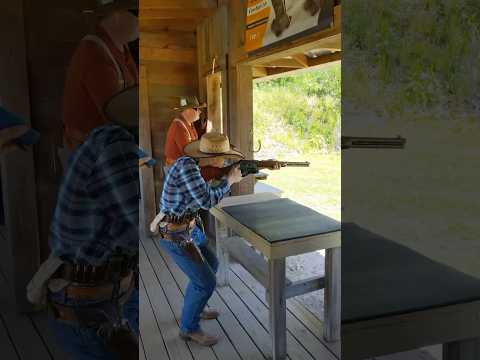
Rifle Reloads - Cowboy Action Shooting

This video details advanced rifle reloading techniques for Cowboy Action Shooting, demonstrated by World Champion Jim Finch. It covers side-gate reloads using both left and right hands, the faster but riskier over-the-top method, and essential tips for smooth feeding. Finch also discusses caliber choices like .38 Specials and .45 Schofield for easier loading and a crucial gunsmithing tip to file the carrier for reliability.

Quick Summary

For easier rifle reloads in Cowboy Action Shooting, consider using shorter cartridges like .38 Specials in .357 Magnum firearms or .45 Schofield rounds in .45 Colt firearms. A key gunsmithing tip is to file sharp edges on the rifle's carrier to ensure smoother round feeding and prevent jams.

Chapters

  1. 00:11Intro: Rapid Fire & Reload Importance
  2. 00:51Side Gate Reload (Left Hand)
  3. 01:19Side Gate Reload (Right Hand)
  4. 01:44Over-the-Top Loading Technique
  5. 02:34Risks & Troubleshooting Over-the-Top Loads
  6. 03:06Caliber Choices for Easier Reloads
  7. 03:34Gunsmithing Tip: Filing the Carrier
  8. 04:06Marlin Rifle Reload Simplicity

Frequently Asked Questions

What are the main rifle reloading techniques in Cowboy Action Shooting?

The primary techniques include side-gate reloads, performed with either the left or right hand, and the faster but more challenging over-the-top loading method. Each requires specific hand positioning and rifle manipulation for efficiency.

How can I make rifle reloads easier in Cowboy Action Shooting?

Using shorter ammunition like .38 Specials in a .357 Magnum firearm or .45 Schofield rounds in a .45 Colt firearm provides more clearance. Additionally, a gunsmithing tip involves filing sharp corners on the rifle's carrier to prevent feeding issues.

What is the 'chicken wing' technique for rifle reloads?

The 'chicken wing' technique refers to lifting the shooter's elbow to expose the rifle's side gate more effectively. This allows for quicker insertion of cartridges using the supporting hand while maintaining the rifle's position.

What are the risks associated with the over-the-top rifle loading method?

The main risk is jamming the rifle if the round is not inserted perfectly level. Precise finger placement is crucial; if the round enters at an angle, it can jam vertically in the carrier, requiring immediate troubleshooting.

More Range & Competition Videos You Might Like

More from NSSF—The Firearm Industry Trade Association

View all →