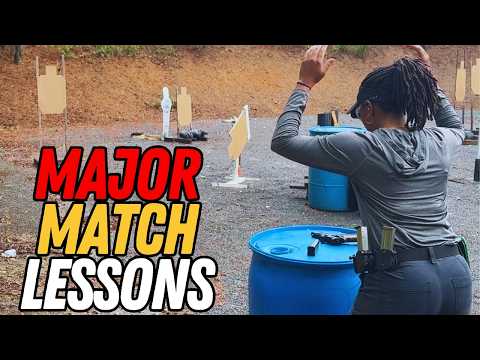
USPSA Day 2 | TGU - S1 E10

Published on August 21, 2024
Duration: 6:59

This video documents Day 2 of the USPSA Area 8 Championship, focusing on competitive shooting techniques and strategy. The speaker emphasizes the importance of fundamentals, managing match pressure, and optimizing hit factor to gain points. The content highlights the competitive nature of USPSA, with the speaker aiming to recover from previous day's losses and ultimately achieving third place overall.

Quick Summary

The hit factor in USPSA is calculated by dividing total stage points by the time taken, with a higher factor indicating superior performance. Competitors manage match pressure by focusing on fundamentals like precise sight alignment and trigger control, aiming for clean execution on each stage to maximize 'A' hits and minimize penalties.

Chapters

  1. 00:05Team Glock University Day 2
  2. 00:07USPSA Area 8 Championship
  3. 00:47Stage 1 Strategy
  4. 01:24Stage 1 Start
  5. 02:03Stage 2 Start
  6. 02:44Stage 2 Hit Factor Analysis
  7. 03:09Stage 3 Start
  8. 04:16Stage 3 Performance Review
  9. 04:53Stage 4 Start
  10. 05:09Final Stage Strategy
  11. 05:49Match Wrap-up & Results
  12. 06:15Final Results Announcement

Frequently Asked Questions

What is the hit factor in USPSA and why is it important?

The hit factor in USPSA is a crucial metric calculated by dividing the total points scored on a stage by the time taken to complete it. A higher hit factor indicates greater efficiency and is essential for winning stages and the overall match, as it directly impacts your score relative to competitors.

How can competitors manage match pressure and stage nerves in USPSA?

Managing match pressure involves focusing on fundamentals, such as precise sight alignment and trigger control, rather than getting ahead of oneself. Acknowledging nerves but prioritizing a strong start and clean execution on each stage can help mitigate their impact on performance.

What are 'tuxedos' in USPSA shooting, and why are they significant?

In USPSA, 'tuxedos' refer to challenging targets that are partially obscured or present a smaller aiming area, often requiring precise shot placement. These targets are significant because they offer the greatest opportunity for mistakes, making them critical for achieving high scores (Alphas).

What is the strategy for the final stage of a USPSA match?

For the final stage, especially if it's fast-paced, the strategy often involves maximizing 'A' hits to shoot as many as possible, ideally all 'A's. Maintaining control and focus is key to finishing strong and securing a good overall score.

Related News

All News →

More Range & Competition Videos You Might Like

More from GLOCK, Inc.

View all →