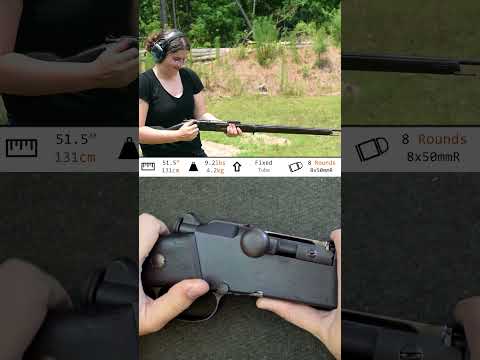
French Remington Rolling Block in 8mm Lebel

Published on January 18, 2016
Duration: 8:05

The French Remington Rolling Block M1914, chambered in 8mm Lebel, was a unique WWI solution for rear-echelon troops. Despite single-shot obsolescence, France contracted Remington for 100,000 units due to Lebel rifle shortages. This robust rifle features a distinctive rolling block action and was produced rapidly, with some examples later modified for Ball N ammunition.

Quick Summary

The French Remington Rolling Block M1914 is a single-shot rifle chambered in 8mm Lebel, produced for France during WWI. It featured a wooden upper handguard and specific French markings. Its robust rolling block action made it a reliable, albeit obsolete, firearm for support troops.

Chapters

  1. 00:00Introduction: French Remington Rolling Block M1914
  2. 01:06WWI Context: Single-Shot Obsolescence & French Needs
  3. 02:19The French Contract: 8mm Lebel Rolling Blocks
  4. 04:00Identifying Features: Markings & 'N' Stamp
  5. 05:04Mechanical Operation: Rolling Block Action Explained
  6. 06:11Live Fire Demo: 8mm Lebel Ammunition & Functionality
  7. 07:01Bayonet & Conclusion: Last Single-Shot Military Rifle

Frequently Asked Questions

What is the French Remington Rolling Block M1914?

The French Remington Rolling Block M1914 is a single-shot military rifle produced under contract for France during World War I. Chambered in 8mm Lebel, it was intended for rear-echelon troops to free up modern rifles for frontline combat.

Why did France order Remington Rolling Blocks during WWI?

France faced severe combat losses of their standard 1886 Lebel rifles and found them slow to manufacture. They contracted Remington for simpler, readily available Rolling Blocks to equip support personnel, ensuring frontline troops had modern weaponry.

What are the key identifying features of the French M1914 Rolling Block?

Key features include a wooden upper handguard, 'CAL. 8 M.M.' stamped on the barrel, and French serial numbers on the buttstock and under the handguard. Some may also have an 'N' stamp indicating re-chambering for Ball N ammunition.

How does the Rolling Block action work?

The Rolling Block action requires the user to cock the hammer first. Then, the breech block rotates downwards ('rolls') within the receiver, allowing a single cartridge to be loaded. The hammer's position ensures the breech block is securely locked when fired.

Related News

All News →

More Reviews Videos You Might Like

More from Forgotten Weapons

View all →