History of the Beretta 92 Series

Published on August 13, 2022
Duration: 32:09

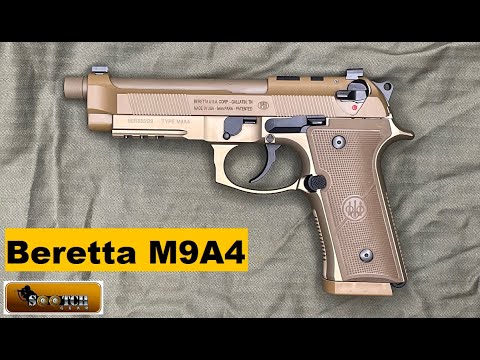
This video provides a comprehensive historical overview of the Beretta 92 series of pistols, tracing its lineage from the early M1951 to modern iterations like the M9A4. It details significant design changes, military adoptions, and technical specifications, highlighting the evolution of features such as safety mechanisms, slide design, and ergonomics. The presenter, with extensive experience, offers insights into the reliability and historical context of these iconic firearms.

Quick Summary

The Beretta 92 series, originating from the M1951, evolved significantly, incorporating influences from the Browning Hi-Power and Walther P38. Adopted by the US military as the M9, its reliability was enhanced by an open-slide design and direct chambering, though early issues with ammunition-induced slide cracking were resolved with a slide capture mechanism.

Chapters

  1. 00:07Introduction to the Beretta 92 Series
  2. 00:45Origins: The Beretta M1951
  3. 01:14M1951 Design and Similarities
  4. 01:51Influences: Browning Hi-Power & Walther P38
  5. 02:17M1951 Variants: Alloy vs. Steel Frame
  6. 03:01M1951 Internal Mechanics
  7. 05:00M1951 Specifications
  8. 05:24The Original Model 92 Pistol
  9. 05:50Step Cut vs. Straight Slide
  10. 06:22Feed Ramp Elimination
  11. 07:15Magazine Capacity and Taurus PT-92
  12. 08:00The Beretta 92S Pistol (1978)
  13. 08:3092S: Pre-Firing Pin Block
  14. 09:3192S Reassembly and Barrel
  15. 09:50Cartridge Feeding Mechanism
  16. 10:43The Beretta 92SB1 / 92S1 (US Air Force)
  17. 11:04Passive Firing Pin Block
  18. 11:19Ambidextrous Controls and Sights
  19. 11:34Magazine Release Change
  20. 11:49The Model 92F and XM9 Program
  21. 12:11Design Changes for Military Service
  22. 12:43Bruneton Finish and Chrome Plating
  23. 13:08M9 Adoption and Competition
  24. 14:51M9 Slide Cracking Incident
  25. 15:33Ammunition Issues: M882 Ball
  26. 16:33Resolution of Slide Cracking Issue
  27. 16:51Slide Capture Mechanism
  28. 18:06The Model 92FS (Safety)
  29. 18:1492FS Popularity in Law Enforcement
  30. 18:48Hollywood Influence
  31. 19:30The M9A1 (US Marine Corps)
  32. 20:08M9A1 Modernized Features
  33. 21:43The M9A3 Program
  34. 22:14M9A3 Features: Optics Ready, Threaded Barrel
  35. 23:20M9A2 Conversion Concept
  36. 23:58The Current M9A4
  37. 24:13M9A4 Optics Ready and Trigger
  38. 25:13Other Beretta 92 Variants (92A1, 92X)
  39. 25:42The Beretta 92 Brigadier
  40. 27:04The Beretta Inox (Stainless Steel)
  41. 27:33Range Test and Shooting Impressions
  42. 31:23Conclusion and Legacy of the 92 Series

Frequently Asked Questions

What were the primary influences on the Beretta 92 series design?

The Beretta 92 series design was significantly influenced by the Browning Hi-Power, particularly its high-capacity magazine, and the Walther P38, which contributed the double-action/single-action trigger system and the de-cocking lever.

Why was the Beretta 92F adopted as the M9 by the US military?

The Beretta 92F was adopted as the M9 after extensive testing where it met all requirements. It ultimately won the contract over the SIG P226 due to a lower cost for replacement parts and magazines during the competitive bidding phase.

What caused the slide cracking issues with early M9 pistols?

Early M9 pistols experienced slide cracking due to improperly loaded M882 ball ammunition. Winchester loaded this ammunition using specifications for commercial cases, which resulted in pressures exceeding safe limits for the aluminum frames.

How did Beretta address the slide cracking issue in the M9?

Beretta implemented a slide capture mechanism by enlarging the hammer and trigger pins. These oversized pins would travel in a track on the slide, catching it if it failed and preventing it from ejecting backward and injuring the shooter.

What are the key differences between the M9A1 and the M9A3?

The M9A1, requested by the Marines, added a 1913 accessory rail and improved grip texturing. The M9A3, designed for modularity, featured a threaded barrel, optics-ready slide, thinner Vertek grip, and a convertible slide (F or G model).

More Reviews Videos You Might Like

More from SmallArmsSolutions

View all →