History of WWI Primer 096: British Hotchkiss Portative MkI* Documentary

Published on April 9, 2019
Duration: 72:22

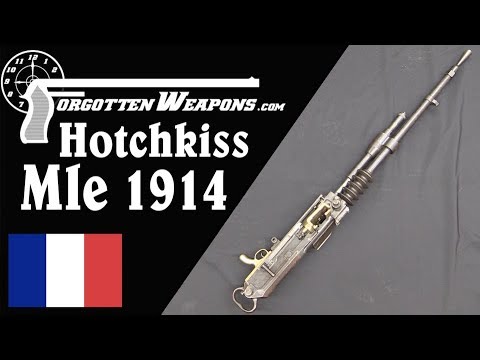
This video provides an in-depth review and historical context of the Hotchkiss Portative MkI*, a lightened version of the earlier Hotchkiss machine gun designed for greater mobility. It details the gun's development, technical specifications, operational procedures, and combat use, highlighting its strengths and weaknesses, particularly its complex feeding mechanism and ergonomics. The review includes a comprehensive disassembly and reassembly guide, along with shooting impressions and comparisons to other contemporary machine guns.

Quick Summary

The Hotchkiss Portative MkI* was a WWI light machine gun, weighing approximately 26.5 pounds, designed as a more portable version of the Hotchkiss 1914. It used .303 British cartridges fed from 30-round metal strips and featured a pistol grip and detachable stock. Its complex feeding and operation presented challenges, but it excelled in vehicle mounts like tanks.

Chapters

  1. 00:00Introduction: Hotchkiss Portative MkI*
  2. 00:28Overview and Weight Comparison
  3. 01:42History of Hotchkiss Machine Guns
  4. 03:42Russo-Japanese War Influence
  5. 05:54Patent and Design Innovations
  6. 08:02Detailed Walkaround: Front to Back
  7. 09:04Feed Strip Mechanism
  8. 10:07Loading Procedure
  9. 11:22Rear Sight and Cocking Arm
  10. 12:28Cocking and Firing Demonstration
  11. 13:26Clearing Malfunctions
  12. 15:08Disassembly Walkthrough
  13. 20:17Animated Internal Mechanics
  14. 23:09Adoption and Trials (France, Russia, US)
  15. 25:56Belgian Trials and Adoption
  16. 28:10Belgian Use in WWI
  17. 29:37British Adoption: MkI and MkI*
  18. 31:40Firing Demonstration
  19. 34:25Combat Use: Indian Troops, Australian Light Horse
  20. 34:4514-Round Quick Strips
  21. 35:43Early Aviation Use
  22. 37:14Roland Garros and Propeller Synchronization
  23. 39:41Portative's Role and Displacement
  24. 40:07US M1909 Benet-Mercie in Action (Columbus Raid)
  25. 42:30Vehicle Mounts and Tank Integration
  26. 43:45Production Numbers and Complexity
  27. 45:40Final Thoughts and Shooting Impressions
  28. 46:47Ergonomics and Handling
  29. 52:26Shoulder Stock and Cocking Handle
  30. 53:53Cocking Handle Operation
  31. 55:14Difficulty of Cocking Handle Operation
  32. 56:37Loading Strips: Difficulty and Jams
  33. 60:55Trigger, Recoil, and Accuracy
  34. 64:00Jam Clearing Experience
  35. 68:21Would You Take This Into Battle?
  36. 70:01Conclusion: Early Light Machine Gun Design

Frequently Asked Questions

What was the Hotchkiss Portative MkI*?

The Hotchkiss Portative MkI* was a WWI-era light machine gun, a lighter and more portable version of the earlier Hotchkiss 1914. It weighed around 26.5 pounds and was designed for greater mobility on the battlefield.

What caliber did the Hotchkiss Portative MkI* use?

The Hotchkiss Portative MkI* was chambered for various cartridges depending on the user. The example shown in the video was chambered for the British .303 cartridge and fed from 30-round metal strips.

How was the Hotchkiss Portative MkI* loaded?

It was loaded using 30-round fixed metal strips fed from overhead, with rounds hanging downwards. This mechanism required careful attention to spring tension and precise insertion to avoid jams.

What were the main challenges of operating the Hotchkiss Portative MkI*?

Key challenges included its difficult loading procedure, the heavy and stiff cocking handle operation, and the complexity of clearing jams. Its ergonomics and the design of its tripod also presented difficulties for infantry use.

Where was the Hotchkiss Portative MkI* most effectively used?

While intended as a light machine gun, the Hotchkiss Portative MkI* found its most effective niche in vehicle mounts, particularly in tanks, due to its compact size and air-cooled design, avoiding the need for a water jacket.

Related News

All News →

More Reviews Videos You Might Like

More from C&Rsenal

View all →